Showing posts with label Yom Kippur. Show all posts

Tuesday, September 25, 2012

Shana Tova ve'Gmar ve'Chatimah Tova to all Jews !


Kapparot Revenge


Chabad Kapparot at Jerusalem's Machane Yehudah Market this morning.


Rebbe posters at Jerusalem's bus stops. Chabad (Lubavitch) wishes a happy and sweet New Year, as well as a speedy redemption, to all Jews.


Erev Yom Kippur shopping at the Machane Yehudah Market


Seen in Jaffa Road / Jerusalem

Copyright / Photos: Miriam Woelke

Monday, September 24, 2012

Rabbi Moshe Soloveitchik: "How negative events can cause new Opportunities"

B"H

It is anything but easy figuring out the Soloveitchik family. In order to get a picture, I have been collecting books, photos and plenty of articles. The strange thing is that modern Jewry and the national religious movement mainly concentrate on Rabbi Joseph B. Soloveitchik (died in 1993). Don't get confused with the "Beit HaLevi" because here I am referring to the philosopher Joseph B. Soloveitchik.

Haredi Jewry often quotes the Brisker Rav as well as all the other Brisker Soloveitchiks. I am interested in both directions but do prefer the Brisker family tree.

As Yom Kippur is right ahead, I would like to share a Soloveitchik story about how we can learn from negative events.

As far as I know, the first Rabbi Soloveitchik mentioned was Rabbi Moshe Soloveitchik who lived in the days of Rabbi Chaim of Volozhin. It was in Slobodka (Vilijampolė) / Lithuania where Reb Moshe was running a successful lumber business. He had inherited all his wealth from his parents but one day, he just lost the business and all his money. 

The Jews in town started speculating about why Rabbi Moshe had lost his business. How could it be that G - d took all the money from him leaving him a poor man ? Of course, people started guessing and some came to the conclusion that Rabbi Moshe may have not given enough Zedakah. However, there was no definitive answer, as we don't know G - d's thoughts and intentions.

After loosing his business, Rabbi Moshe Soloveitchik didn't  really know what to do with himself and started learning at the local Beit Midrash. After some time had passed, he and other Jews noticed how talented he actually is with his Torah studies. He became an excellent scholar founding the great rabbinical Soloveitchik dynasty. 

If Rabbi Moshe hadn't lost his wealth, he would have carried on with his business without entering a Beit Midrash and discovering his real talent and task in life. Because he lost his business, he got the great opportunity of starting something new and even founded a rabbinic dynasty. 

From this we can learn that not everything negative happening to us should get us into depression. Sometimes we must loose somethin in order to find a new way in our life. We may be successful in one field and think that this is it. However, what if it turns out being a dead end and, in the end, we are left with nothing. Hopefully we get over it and start something new. Start a new life and suddenly we realize that loosing something valuable in the past wasn't the end of the world but a new opportunity for the future.


Later on, Rabbi Chaim of Volozhin chose Rabbi Moshe's son, Rabbi Yosef Soloveitchik, to marry his daughter Rielka. The beginning of the Soloveitchik dynasty. 
_________________________

Source:

The Brisker Rav by Rabbi Shimon Yosef Meller

Yom Kippur 5773 / 2012 Times Jerusalem


At the Kotel (Western Wall)

Photo: Miriam Woelke
B"H

Tomorrow afternoon the highest Jewish holiday, Yom Kippur, is going to begin. The official Yom Kippur times for Jerusalem are:

Candle Lighting Yom Ha'Kippurim: 4.56pm (16.56)

Yom Kippur, the fast, ends on Wednesday night at 6.06pm (18.06). 

Please be aware that all Egged buses will stop running at 2pm tomorrow (Tuesday) ! Those of you who are planning to travel should do so early in the morning. Furthermore, restaurants and shops are going to close around the same time. At 2pm. Even in secular Tel Aviv !

In case you are in Jerusalem, you are Jewish and still don't have a place for "Kol Nidre" or the actual service including "Ne'ilah" on Wednesday, there are different places in the Old City where you can go. From Aish Ha'Torah to the Heritage House / Jeff Seidel / Aish Programme to Chabad (Zemach Zedek). Not to forget the Sephardic Center in the Jewish Quarter or Rabbi Israel Goldberg, the Chabad Shaliach in Rehavia.

Yom Kippur: Everyone Falls


Courtesy of Aish.com

Sunday, September 23, 2012

KOL NIDRE and its Misinterpretation

B"H

Kol Nidre is one of THE most Jewish prayers of the Yom Kippur service. The word "prayer" is a slightly out of place, as Kol Nidre is not really a prayer. People rather call it a chant or saying. However, Kol Nidre is an ancient text sung in an ancient heartbreaking melody. Usually it is said before sundown and Ma'ariv. 

With Kol Nidre we begin the very long Yom Kippur prayer service. The Aron (Ark) is opened and three Torah scrolls are being removed and put onto the Bimah. The Shaliach Zibur takes one of the scrolls into his arm and the other two are taken by two respected community members. There is the Minhag that the men wear at Tallit at this point. In most cases the Shaliach Zibur is a rabbi whose task is to sing the Kol Nidre three times. 

The history of the Kol Nidre goes back to the "Responsa of the Geonim" (approx. 800 – 1000 CE). The purpose of the Kol Nidre is to annul all our vows which we might do during the new year until Rosh HaShana. The famous Jerusalem Chabad rabbi, Rabbi Adin Steinsaltz, writes in his book "A Guide to Jewish Prayer" that this ceremony is an emotional release for all participants (Kehilah). The Kol Nidre has a deep emotional meaning; our soul rises to higher levels and, thus, gaining inner peace for Yom Kippur. 

As I was doing some research on this subject I found out that already in the Middle Ages the church was spreading rumours and hatred, as they misinterpreted the meaning Kol Nidre. Not, that this kind of causing hatred and anti – Semitism is anything new, however, until today these misinterpretations seem to be quite popular among Christian websites. Nothing has changed, so to say. Certain websites still keep the old claim alive that Christians are better business partners than Jews, as one can rely on a Christian promise. Jews never keep anything because they have their Kol Nidre which annuls all promises. Welcome back to the Middle Ages. 

Why do we say Kol Nidre ?
Many people especially like to make a vow when they are angry. "If you do not such and such, I will never speak to you again" – is one of the most popular and common vows. As soon as we overcome our anger we forget about our vows but G – d does not and could later accuse us of not keeping anything. The Kol Nidre annuls such kind of vows in advance and it has nothing to do with being a good or bad business partner. 

However, the Jews of the Middle Ages did use the Kol Nidre for something else. Many of them were forced by the church to convert to Christianity and many did so. The new "Christians" went to church and said whatever Christian things in public but as soon as they came home, they prayed Shacharit. The show was over. Let's get back to our real life. 

Whatever church forced them to vow, the Jews did but always keeping the Kol Nidre in mind which annuls everything right away. This was probably the reason why the church of the Middle Ages got fed up and invented some ground for more hatred.


Cantor Shalom Mendelson singing KOL NIDRE


Friday, September 21, 2012

The Teshuva Pressure


Ritual washing hands in front of the Kotel (Western Wall)

Photo: Miriam Woelke
B"H

So, here we are. Yom Kippur is right ahead of us and the present "Aseret Yame'i Teshuva - Ten Days of Repentance" are just screaming out to us: "Teshuva, Teshuva, Teshuva !"

Usually when I hear the word TESHUVA, I just see a tons of Mitzvot and rules right in front of me. Such an amount of Mitzvot piling up to a mountain. This is the time when I start panicking. I don't necessarily see myself as a failure but there are times when you feel that you simply cannot make it. To get out of this pressure situation, you keep telling yourself that everything has got so bad that you probably won't make it anyway. So, why then start at all ? The word TESHUVA alone seems like a huge burden and the only solution is: Escape.

Last night I went to a Shiur where the Rabbi was talking about Yom Kippur and Teshuva. There weren't too many people because the Shiur started right after Zom Gedaliyah was over. However, those few people listening to the Rabbi apparently thought like me. One woman asked the Rabbi whether we now have to do a perfect Teshuva. All of us looked at the Rabbi with the hope that he may say NO.

To make a long story short, he didn't say NO but he did give us hope. 
Teshuva doesn't mean correcting the whole world and turning into the most perfect person within a few days. Instead Teshuva begins within ourselves. We should ask ourselves what we can do. In small steps and not a speedy exaggerated kind of Teshuva. 

Sit down and think about what YOU can do. Don't look at the world or your neighbour but your own little step of Teshuva according to your potential. With what are you comfortable and how you should continue in the future ? Don't think about huge changes but tiny little steps on you path of becoming a better person.

When the Rabbi said "Tiny Steps" we were all happy. Suddenly Teshuva didn't sound like such a great and impossible burden but a task we can learn how to deal with. There is no need for becoming a complete person within seconds and this is what encouraged us to get some Teshuva done.

Sunday, March 4, 2012

Chassidic Rabbis on Purim

B"H

Rabbi Aryeh Leib of Shpole and Rabbi Noach of Lachowicze regarded Purim as an opportunity for great spiritual achievements. Rabbi Issachar Dov Baer of Radoszyce invited barren women to his Purim celebrations and promised them that they would conceive worthy children.

Purim was compared to Yom Kippur, an ideal time for repentance. On Yom Kippur, one repents out of fear, whereas on Purim on repents out of love.

Rabbi Shneur Zalman of Liadi: "If the Jews had changed their religion, Haman would not have attacked them".
____________________________ 

Source:

"The Encyclopedia of Hasidism" – Tzvi M. Rabinowicz

Tuesday, October 25, 2011

Saturday, October 8, 2011

Yom Kippur Experience 5772

B"H

Staying in Tel Aviv over Yom Kippur was the perfect decision although I must admit that there is nothing like the Yom Kippur atmosphere in the Old City of Jerusalem. Like near the Kotel (Western Wall). 

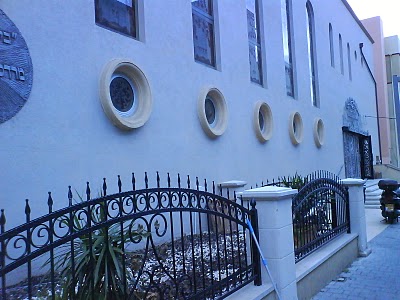
For all three services, I was at Chabad near Shenkin Street. Some years ago, Chabad took over the building and has renovated it in a very nice way. The inside just reminded me of the Hurvah Synagogue in Jerusalem. 


Photos of the Central Chabad House taken at a different occasion:

Miriam Woelke

"Kol Nidrei" was packed last night. The positive Tel Aviv campagne was not too charge any seats at the Synagogues located in the city center. Local papers published all Synagogues where people can go without ordering an overpriced seat in advance. Thus, many Tel Aviv inhabitants who otherwise don't go to Synagogues, should fell free and go. And they did.

It was a very nice idea and especially Chabad was ready to receive the mainly secular and traditional crowd. They had put out extra Tallitot for men, shawls for maybe not too modestly dressed women, copies of prayers and special prayer sections as well as Machzorim. 

The services were very nice and Israeli - like fast. Ne'ilah was scheduled for 4.15pm but didn't start until 5pm due to a lon Mincha service. Then the rush through Ne'ilah began and we even had a later blow of the Shofar. We were only done after 6pm although the Tel Aviv fast was over at 5.54pm.

Originally I was planning going to different shuls but because of the beauty of the new Chabad Synagogue I got stuck there. 

SHANA TOVA & METUKA - Have a great and sweet year !!!

Friday, October 7, 2011

GMAR veCHATIMAH TOVA !!!

B”H 

To all my Jewish readers: GMAR veCHATIMAH TOVA – May you be inscribed in the Book of Life ! 

It is rather strange. I am expecting some Yom Kippur content and most Israeli papers are writing about the Yom Kippur War today. Remembering soldiers, tactics and the fact that we still have to protect ourselves, as our enemies keep on planning to destroy us. What the majority of Israeli politicians hasn’t learnt is to also trust in G – d and not the latest, most advanced, tank or missile. 

For me, Erev Yom Kippur is a bit stressful because I have to work until, at least, 3pm. Then going home, showering and eating. Unfortunately, there exist too many rumours from those people who don’t really know Tel Aviv. Despite all false claims, Tel Aviv has plenty of Synagogues and I will do some Shul hopping tomorrow. From Chabad, to a litvishe haredi Synagogue, maybe something Sephardi inbetween and the Ne’ilah service at the Great Synagogue with Tel Aviv’s Chief Rabbi Israel Me’ir Lau. 

For those of you visiting Israel at the moment: Public life will almost completely stop between 2 – 4pm. The last bus from Tel Aviv to Jerusalem is running at 2.30pm. Even the Tel Aviv supermarket chain AM:PM is going to shut down until tomorrow night. 

ZOM KAL – Have a good and easy Fast !

A look into the YOM KIPPUR MACHZOR

B”H

A brief look into the Machzor (Prayer Book) of the Jewish Holiday YOM KIPPUR


We are praying the entire Machzor on Yom Kippur. It includes the first Ma'ariv (evening prayer) after Yom Kippur began, the morning service "Shacharit", the afternoon service "Mincha", the Ne'ilah Service (Closing the Gates) as well as the last Ma'ariv Service after the blowing of the Shofar and Havdalah.


The beginning of the Shacharit morning service with the HAMELECH - The King - Prayer.G - d is "sitting" on His thrown and judging the Jews.


Again and again: The "Vidui - Confession" of our sins (Al Chet she chatanu lifane'icha").


Almost at the very end, the Kehilla is crying out: SHEMA ISRAEL. We are announcing G - d as the ONE and ONLY G - d. The paragraph following is a bit unusual because, throughout the year, we are saying the part of the SHEMA ISRAEL, "Baruch Shem Kavod Malchuto Le'Olam va'Ed", with a low voice. However, on Yom Kippur, the Kehillah is saying it out loud. Afterwards we are saying out loud "Ado - nai Hu HaE - lo - him" (seven times).


Photos: Miriam Woelke

Thursday, October 6, 2011

Yom Kippur Atmosphere

B”H 

Finished and tired from work, this is how I am going to enter tomorrow's Yom Kippur. I still need to work and will be done at the early afternoon, run home, shower, eat a bit and continue running to the Synagogue. Afterwards I am going to do one thing: Sleep.

Shabbat morning (Yom Kippur), Shacharit, walking home after a few hours, going to rest and then its time for Mincha and Ne'ilah. 

It is going to be a quiet and relaxed Yom Kippur because I am at the burnout and falling apart edge. I don't care about the fasting (except for missing my favourite cup of coffee) but just need one thing: A Bed !


Wednesday, October 5, 2011

Why do bad things happen to good people ?

B"H

A few thoughts on Yom Kippur

If G - d is good, then He wouldn’t want bad things happen to good people, and if G - d is omnipotent, He could prevent bad things from happening to good people. Therefore, when bad things do happen to good people, we wonder if G - d is really good or omnipotent, or whether He exits at all. 

Ten Explanations 

1. We can predict that more intelligent beings will often to things that less intelligent beings won't understand. 

2. The suffering might not be caused by actual evil, but a perfectly fine circumstance which this person is responding to irrationally. 

3. The circumstances might not be a punishment but rather an opportunity to grow (a test). 

4. The difficulties might be just a means to push someone towards a wonderful circumstance. 

5. In many cases, what seems like evil at the hand of G - d might be evil at the hand of man. 

6. We might not appreciate the value of a kindness or the seriousness of cruelty. 

7. Since the only fair reward is based on effort, not on objective accomplishment, then a good G - d might send obstacles to maximize our effort and consequent reward. 

8. A person might be given to stimulate them to rethink their plans or past behaviour -- as sort of wake - up call. 

9. There are times when progress towards history 's - successful - conclusion necessitates supernaturally limiting the success of the righteous. When they are supernaturally handicapped, that allows forces of evil to become more manifest. People then realize more clearly what it means to live with evil, and choose good -- not out of fear of punishment, but out of clarity about the difference between good and evil. In the end days, in order to accelerate us the final outcome (of man choosing good), G - d thus accentuates the choice. 

10. Reincarnation (Gilgul) 
______________________________

(Text from Yeshivat Aish HaTorah)

“Break(fast)” on Yom Kippur

B”H 

More than ten years back, I was hanging up some flyers for Jeff Seidel’s Student Information Center in Jerusalem’s Jewish Quarter of the Old City. On the flyer it said that a BREAK – FAST is going to take place after Yom Kippur is over. 

I was near the Kotel (Western Wall) Plaza when I hung the last flyers on the walls of AISH and Yeshivat HaKotel. Suddenly an older Chassid passed by, read one of the flyers and tore it apart. In Hebrew he said to me that I should be ashamed of myself. 

People who are not too familiar with English vocabulary don’t necessarily read “Break – Fast” but BREAKFAST.

Tuesday, October 4, 2011

Bnei Brak and "Noam Elimelech"

B"H 

It seems like I am becoming more and more attached to the haredi part of Bnei Brak. While living in Jerusalem, I have become extremely familiar with many local haredi areas and never really liked the haredi Bnei Brak near Tel Aviv. Those looking for real haredi action, great Tishes and Synagogues need, of course, go to Mea Shearim. Unfortunately, Mea Shearim has become an Israeli tourist center almost every Friday night. Visitors who are neither haredi nor have any deeper knowledge about Chassidism, stroll around the ultra - Orthodox neighbourhood. National religious youth, not having any clue about haredi life, starts yelling around and squeezes itself onto the Tish benches. Moreover, quite a few so - called "tour guides" make lots of money by taking groups to the Mea Shearim Tishes. 

Bnei Brak doesn't have too many visitors from the outside on Friday nights. This is a bit unusual, as the inhabitants would show their dislike publically. You don't just walk into Kiryat Yoel on a Friday night when you are national religious or a tour member. Outsiders don't run to the Gur (Ger) Tish. By the way, the Gerrer Chassidim don't accept any women at the Rebbe's Tish ! 

Not too many people go to the Bnei Brak Tishes unless it is Vishnitz. Rabbi Israel Hager attracts plenty of visitors and his Ezrat Nashim goes about two floors. I have been to his Tish twice but once in Jerusalem and the second time in Kiryat Vishnitz when he celebrated outside and not at the inside Tish. 

I have been quite a few times to Bnei Brak lately. For several hours in a row and walked as many streets as I could. I have become familiar with some parts but keep on getting to know the place much better. What I love is all those small Shtieblachs all over town and I finally found the Chernobyl Synagogue where I am planning to go for a Tish. 
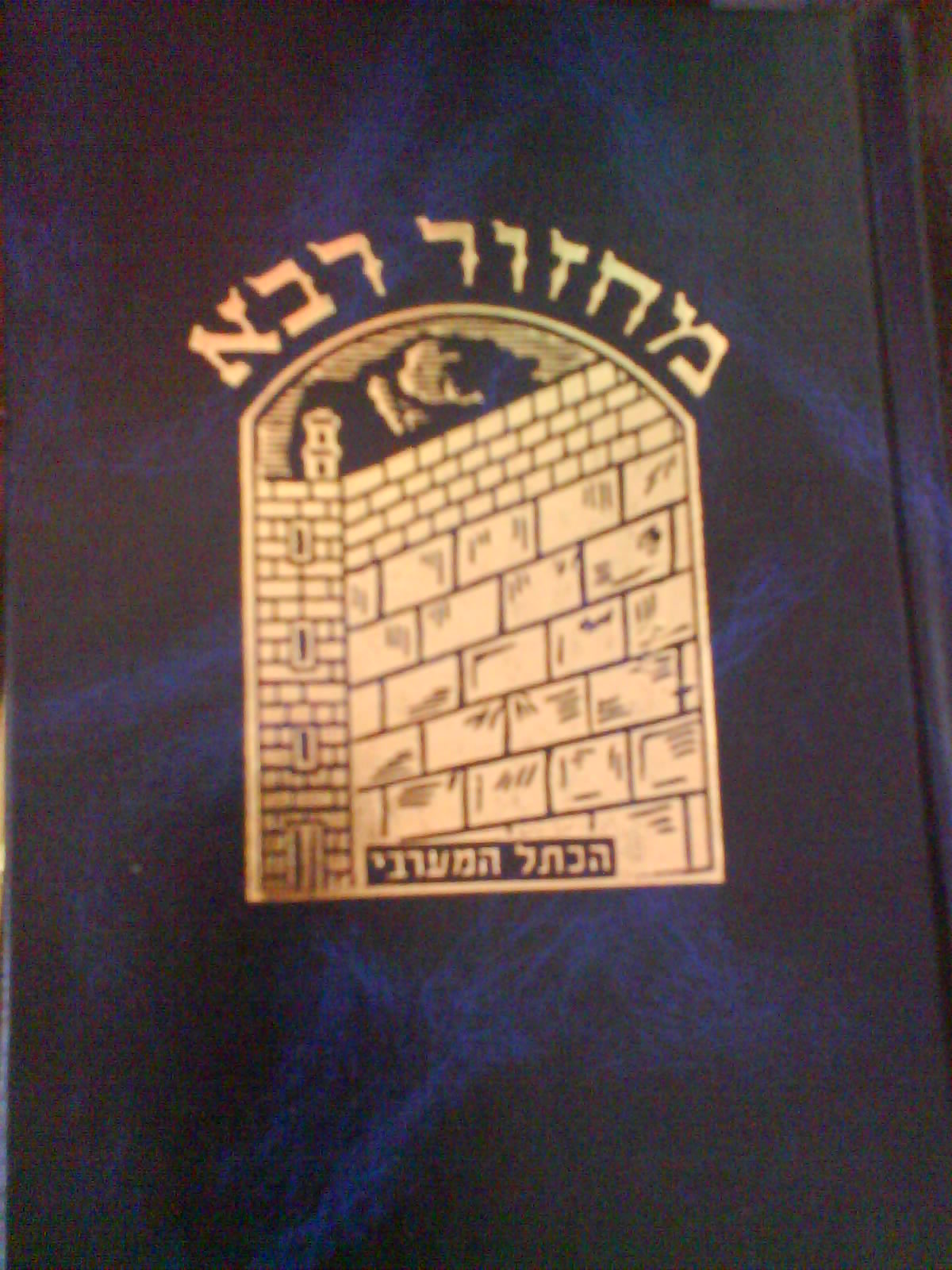
Yesterday, I again went to Bnei Brak but this time I wanted to buy a Yom Kippur Machzor, as my other Machzor is still in Jerusalem. I am not getting to Jerusalem before the Chag in order to pick it up and so I decided to get a new one. Not just a plain Machzor but the "Machzor Rabbah" Nussach Sfarad. Meaning, a chassidic Machzor. 

Now you think that buying a Machzor in Bnei Brak shouldn't be a problem and it will basically take about, hhmm, let's say, 15 - 20 minutes. Maybe even less. But here I was wrong because I had completely forgotten about something. 

Ashkenazi booksellers have the habit to sell everything in a set and thus I found all Machzorim in sets. However, I didn't need a whole set with the holiday prayer books for Pessach, Shavuot, Rosh Hashana, Yom Kippur and Sukkot but just a single one for Yom Kippur. All the rest I am going to pick up in Jerusalem anyway. 

The first two bookstores I went to (all of them in Rabbi Akivah Street) were offering sets only. I didn't put on my religious wardrobe yesterday and went in pants. You should have seen the face of some people in the bookstores when I walked in.:-)))

Only sets and one entirely Sephardi bookstore. I spoke to the owner who almost convinced me to take a Sephardi Machzor, as he had plenty of single ones. This is nothing new for me because I already have a Sephardi Machzor for Rosh Hashana, besides my chassidic one. What I found out is that you, as an Ashkenazi or Chassid, are able to survive with the Sephardi Yom Kippur Machzor. It is much harder having a Sephardi edition on Rosh Hashana. However, towards the end of the Machzor, Ashkenazim start introducing different prayers and then you are in trouble for a while. Eventually I ended up not buying the book and I was almost down at Kahaneman Street, as I saw another bookstore. Not the Artscroll one which is totally overpriced !

I walked into the store and found myself with the shopkeeper who was a younger Chassid. Chassid like hardcore and not some Breslover or Chabadnik.:-)))

A national religious woman looked through the Machzorim and Siddurim and I finally found a single Yom Kippur Nussach Sfarad. I was so happy, the national religious woman wasn't and started an argument with the shopkeeper. While she left, I had found some more interesting books. Among others, the Torah commentary of Rabbi Elimelech of Lizhansk, "Noam Elimelech". I asked the shopkeeper how much it is and he almost fainted. Also because I asked him about the "Ohev Israel" commentary. 

The last thing he had expected was me buying "Noam Elimelech". I probably looked like Tel Aviv to him and he saw me going through the Machzorim. This was okay but when I showed some deeper interest, he couldn't believe it. 

However, I bought the Machzor and "Noam Elimelech" and when I paid, the Chassid handed me another book to look at. Then it was my time to faint, as he had given me a book like "Modest Women and their Thoughts" or something like that. I told him that I may buy it next time.:-)))

Anyway, I am very happy with my two books and I think I found a bookstore where I am going to buy more often. Maybe even the "Modest Thoughts". 


My new Machzor for Yom Kippur


The "Noam Elimelech" I purchased. 

Photos: Miriam Woelke

Sunday, February 27, 2011

Yom Kippur: Preparing to appear in front of the King

B”H

PURIM is right ahead and until then, I am going to publish some insights. Here is a brief but very interesting introduction providing us with a high amount of thought.

The source is the Talmud Tractate Megillah 13:

It says in Megillath Esther (Book of esther) 2:12:

And when each maiden's turn arrived to go to King Achashverosh, after having been treated according to the practice prescribed for the women, for twelve months, for so were the days of their ointments completed, six months with myrrh oil, and six months with perfumes, and with the ointments of the women.

The Vilna Gaon (Rabbi Eliyahu ben Shlomo Zalman Kremer, 1720 – 1797), compares the appearance of the maidens in front of Achashverosh to Yom Kippur, when the Jews are standing in front of the King (G – d) in order to await His judgment. Meaning, we also must prepare ourselves thoroughly. 

Remark: After Achashverosh killed his first wife Vashti, he was looking for a new wife and all kinds of maidens came to Shushan in order to stand in front of the King and find favour in his eyes.Moreover, YOM KIPPUR is a Jewish holiday and Gentiles have nothing to do with it. On Yom Kippur the Jews are standing in front of G - d in order to get judged by Him. Gentiles are being judged on Rosh HaShana.

The kabbalistic book ZOHAR uses the word “Na’arah – Maiden” also for a person’s soul (Neshama). Hence, the verse means that one's Neshamah is given twelve months to prepare to come before the King (G – d).

The Vilna Gaon further comments that G – d only forgives our sins when we seriously repent. When we do Teshuva (repentance) and, at the same time, intend not to repeat the same mistake but try to improve our actions and behaviour.

The ten days of Repentance (Aseret Yame’i Teshuva) between Rosh HaShana and Yom Kippur would be too stressful and the Jews sometimes exaggerate in their prayers and Teshuva. Therefore, G – d gives us twelve month of Teshuva in order to show our sincere repentance. 
____________________________________

The entire MEGILLATH ESTHER in English
http://www.chabad.org/library/bible_cdo/aid/16474

Wednesday, September 15, 2010

The Days before Yom Kippur

B"H

This Yom Kippur is falling on a Shabbat and thus causing us additional prayers during the service. Sorry, for thinking so terribly attached to the physical world but I am just being realistic. However, the worst thing for me on Yom Kippur is not the lack of food but rather the lack of a good cup of coffee.

The special custom of this week is visiting the graves of the Zaddikim (Righteous). This already took place in the days of the Geonim (Talmudic Rabbis, approx. 650 - 1000 after the beginning of the Common Era). Jews don't pray to the dead Zaddik himself but may ask his soul for help to change G - d's mind regarding the final verdict on Yom Kippur.

I enjoyed myself when I went to the famous Safed (Zfat) cemetery on Sunday morning. Unfortunately I didn't have too much time to say a few Tehillim (Psalms), as my bus to Jerusalem was leaving.

Another Israeli custom is "going to the Kotel (Western Wall) at night in order to say Selichot. Jews from all over the country are there and they especially coming by bus in groups. Some Haredim are already upset because of the missing modesty because many secular women just run in dresses with something which looks like "mini".

I didn't have a real Rosh HaShana feeling this year. The reason may have been that I stayed in Safed with a huge group of Jews from all over Israel. People screaming, kids yelling and rushing from one event in one room to the next. Eventually the feeling came but now for Yom Kippur it is different. Tomorrow afternoon I am taking off to the grave of a very famous Zaddik: The Rambam (Maimonides, 1135 - 1204) in Tiberias.

I will be back in Jerusalem for Yom Kippur and hope that everything is going to work out. This Friday is not a regular Friday, as due to Yom Kippur, buses stop running at about 2pm and shops will be closed by 2.30pm.

Whoever wants to face a great Jewish scene:
Be at the Kotel an hour before Yom Kippur ends and see thousands of Jews praying the Ne'ilah service. Then G - d will be closing the gates, so to speak, and may have made His final judgement over every single Jew.


Anyway, my favourite holiday is Sukkot and I am very much looking forward to that. Traveling to some further Jewish sites and going to chassidic Tishes in Bnei Brak as well as in Mea Shearim. 
_________________________

Remark:

YOM KIPPUR is a Jewish holiday and Gentiles have nothing to do with this holiday ! Whereas Rosh HaShana was for Jews and Gentiles because G - d was judging the world, on Yom Kippur only Jews are being judged !

Photos: Chicken Kapparot in Jerusalem


B"H

Last night, I went to see the Yom Kippur Kapparot done with chickens. Especially kabbalistic literature is referring to this way of doing Kapparot before Yom Kippur.
Here are some impressions from the schoolyard of the ETZ CHAIM YESHIVA near Jerusalem's Machane Yehudah Market:


Ritual slaughter (Shechitah) of the Kapparot - Chicken done by the Schochet.


The Chickens


After the ritual slaughter, the Schochet throws the chickens into those wholes in order to loose their blood and eventually die.

One of the guys working at a stand offered me a chicken but I refused. A while ago, I stopped doing Kapparot at all and I am thus following the Ramban who calls it a "foolish custom".
I took those pictures but was near to throw up. The smell of fresh blood was unbelievable and I escaped after a short while.


Photos & Copyright: Miriam Woelke


Links on KAPPAROT:


Kapparot in Jerusalem

B"H

The KAPPAROT before Yom Kippur are nothing more but a custom ! 
Some great Rabbis say it is a foolish custom others see it as a Tikun (rectification of one's soul). 

I don't participate in the Kapparot but if you are planning to do so:
You can  participate either by giving a certain amount of money (about 20 Shekels / 5 Dollar and more) as Zedakah for a Yeshiva etc. The second possibility is buying a chicken alive and a Shochet is going to slaughter it ritually on the spot. The chicken is being circled over your head and, symbolically speaking, the sins are being transferred into the chickens. Then it will be slaughtered and you can either give it to the poor or take it home and eat it. 


Killing thousands of chickens is causing an outcry of animal activists every single year anew. Demonstrations against Kapparot with chickens are taking place all over Jerusalem. Nevertheless, especially the Ashkenazi haredi society doesn't give in and insists on Kapparot with chickens. Many other Jews have switched to money (see photos below).


In front of the Machane Yehudah Market (in Jaffa Road).

Photos: Miriam Woelke


Links on KAPPAROT:


Sunday, September 27, 2009

Zom Kal !


B"H


In Jerusalem, everyone is rushing around getting all the shopping done before the shops are closing (at about 2pm this afternoon) and the Fast starts.


I wanted to write much more but now I am in a hurry as everyone else.
What's is left is wishing all of you a GMAR VE'CHATIMAH TOVA and ZOM KAL (an easy fast). I don't feel too well and hope that I can make it.
Seems like every year I am getting weak before Kol Nidre.