B"H
Hello everybody. I hope that you are all having enjoya great Sukkot holidays.
These days, I am very busy in Jerusalem because there are plenty of celebrations.
I already prepared some articles about the Simchat Beit HaShoeva parties going on here, and I will publish everything within the next few days.
The day before yesterday, for instance, we went to a highly controversial Chabad concert taking place at Rehov Channah, right next to Bar Ilan Street. Chabad had a great Simchat Beit HaShoeva concert. They had set up a huge stage in front of one of their Yeshivot (next to the synagogue of Chassidut Karlin).
The Edah HaCharedit as well as the Agudat Israel and further litvishe rabbis claimed that the concert would be immodest and put a ban on the event.
Despite the ban, we went to see it and I will write further details soon. We also went to the demonstration against the whole Chabad show where two Haredim got arrested. The majority of the participants in the demonstration were Vishnitz, Satmar and litvishe Haredim.
Afterwards we moved on to Mea Shearim and participated in the Toldot Aharon and Toldot Avraham Yitzchak parties. They were packed with people and both groups definitely know how to throw a party.
Meanwhile, certain streets in Mea Shearim have a Mechitzah and are divided into men and womens' sections. I do not really understand the reason, as everything is a little mixed up anyway and the whole area is too small for a division.
However, I got used to it and thousand other people did the same.
So far, Moadim Le'Simcha and I will let you know all the details about the Holy City.
By the way, tomorrow morning after Shacharit, the Birkat HaCohanim is taking place at the Kotel.
Tomorrow night at 8pm:
Chabad is having another Simchat Beit HaShoeva concert at the Cardo in the Jewish Quarter. I do not know if there is a ban on it as well.
Saturday, September 29, 2007


Wednesday, September 26, 2007
חג שמח
B"H
To all readers:
Chag Sameach, חג שמח, and have a great Sukkot holiday.
Sukkot in Jerusalem is always very special and in the course of the holiday, I will write more. Especially Jews in the Diaspora should know, how we Jerusalemites are going to celebrate this special holiday.
Tonight I am planning to go with a friend to a synagogue service in Mea Shearim. Probably Karlin or Toldot Avraham Yitzchak.
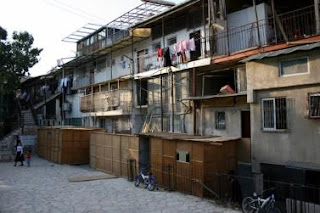
Sukkot in Mea Shearim

To all readers:
Chag Sameach, חג שמח, and have a great Sukkot holiday.
Sukkot in Jerusalem is always very special and in the course of the holiday, I will write more. Especially Jews in the Diaspora should know, how we Jerusalemites are going to celebrate this special holiday.
Tonight I am planning to go with a friend to a synagogue service in Mea Shearim. Probably Karlin or Toldot Avraham Yitzchak.
Sukkot in Mea Shearim
Tuesday, September 25, 2007
The Kosher Sukkah in Auschwitz
B"H
Every Sukkot, Rabbi Mordechai Machlis keeps on telling the same story about a kosher Sukkah in Auschwitz. He does it for his family and his many many guests.
This story is about his friend and teacher Rabbi Yitzchak Traube. Rabbi Machlis always concludes with the words that he does not know whether anything similar ever happened or whether this story has ever been published before. Listeners are always shocked.
I want to share the story with others in remembrance of Rabbi Yitzchak Traube.
Rabbi Yitzchak Traube was imprisoned in the Auschwitz death camp for quite a while. Every morning, he and other prisoners were forced to walk along a certain road within the camp in order to get to work.
The festival of Sukkot was approaching, and as Rabbi Traube walked along the road, he saw little branches laying there. He looked aside and saw a building which looked more like a ruin. Only the walls were left but without a roof.
From now on, every day he pushed with his feet more and more branches to the side of the road. He had to be very careful because the guards might suspect something.
On Erev Sukkot, he left his barrack and ran to the place where he had pushed the branches. One cannot imagine in what danger he was. Leaving the barrack at night and being caught meant instant death. However, the rabbi was lucky. He put the branches over the walls, and this way he built a kosher Sukkah. Additionally, he had saved up some bread which he ate.
In the middle of Auschwitz, he fulfilled the Mitzwa of making a blessing on food and sitting in a kosher Sukkah.
Every Sukkot, Rabbi Mordechai Machlis keeps on telling the same story about a kosher Sukkah in Auschwitz. He does it for his family and his many many guests.
This story is about his friend and teacher Rabbi Yitzchak Traube. Rabbi Machlis always concludes with the words that he does not know whether anything similar ever happened or whether this story has ever been published before. Listeners are always shocked.
I want to share the story with others in remembrance of Rabbi Yitzchak Traube.
Rabbi Yitzchak Traube was imprisoned in the Auschwitz death camp for quite a while. Every morning, he and other prisoners were forced to walk along a certain road within the camp in order to get to work.
The festival of Sukkot was approaching, and as Rabbi Traube walked along the road, he saw little branches laying there. He looked aside and saw a building which looked more like a ruin. Only the walls were left but without a roof.
From now on, every day he pushed with his feet more and more branches to the side of the road. He had to be very careful because the guards might suspect something.
On Erev Sukkot, he left his barrack and ran to the place where he had pushed the branches. One cannot imagine in what danger he was. Leaving the barrack at night and being caught meant instant death. However, the rabbi was lucky. He put the branches over the walls, and this way he built a kosher Sukkah. Additionally, he had saved up some bread which he ate.
In the middle of Auschwitz, he fulfilled the Mitzwa of making a blessing on food and sitting in a kosher Sukkah.
Monday, September 24, 2007
No Entrance for Women
B"H
This year's holiday of Sukkot is going to start this Wednesday night. In Israel we only celebrate eight days whereas Jews in the Galut celebrate nine days. According to some opinions, the people in Galut need more time receiving any spirituality and therefore need an additional day. For us in Israel it is more like a local phone call to G - d and the Shechinah is much stronger.
On Sukkot, we don't only need a Sukkah but also a Lulav. The Lulav is a Mitzwa MiDeoraita and consists of a palm branch as well as of some myrtle and willow branches. The Etrog is also part of the Lulav but kept separately and not bound together with the branches.
Every day during Sukkot we shake the Lulav except on Shabbat when it turns into Mukzeh. We shake it into all six directions (down, up, north, east, south, west) and thus claim G – d's presence everywhere. The Mefarshim tell us different reasons for the Lulav, however, for Kabbalists, the Lulav is extremely important.
It is a well – known tradition to start building the Sukkah right after the end of Yom Kippur. It is always a special event going into different Sukkot every year, as each Sukkah has its own style. Some people like it more traditional and hang up posters of famous rabbis or pictures of Jerusalem. Other decorate it according to a more modern style. Expensive or moderate decoration, you will find anything.
Especially in religious neighbourhoods your can hear hammering and see people rushing around building Sukkot. A Sukkah has to be kosher (see Talmud Masechet Sukkah) which means that it has to be of a certain height and it must have a certain amount of walls. Poeple without balcony build their Sukkah in the garden in front of the house or in backyards. Especially in Mea Shearim the Chassidim are very busy these days. Building Sukkot everywhere, in any backyard and at any place. Sukkah next to Sukkah which would be too much for me, as all the neighbours participate in your private Sukkah conversations.
At the moment, you can find Lulav markets at almost each corner in religious areas in Jerusalem. Even in yards of private houses, as I saw in Malchei Israel Street last night. Some Belzer Chassidim just opened a stand and sell the four Minim.
I always love watching the Chassidim buying their Arba Minim. With total concentration they check every leaf of the branches. Of course, a Lulav has to be kosher as well and the leaves should no be damaged. Besides all the small stands there are huge Lulav markets in haredi areas. The biggest are at Supnik next to Kikar Shabbat and the one next to Bar Ilan Street opposite Sanhedria.
I cannot say that I understand the reason, but women are not allowed to enter the big chassidic markets. There are even signs outside: "Women are forbidden to enter".
I always ask myself why women are not allowed to enter. To be a little sarcastic: Are men too afraid that there full attention is turning to the women ? Are women in haredi Lulav markets are seen as a threat or men think that women simply don't understand what is going on ? Is it too much up to a man buying the Lulav ?
If so, why are female and male allowed to enter the same shops or supermarkets ? I don't see a difference between a Lulav market and a supermarket.
According to Halacha, a woman is allowed to shake the Lulav which I personally do almost every day during the Festival, and I know certain religious families where the woman even buys the Lulav sets for the males in the family.
As there is nothing I can do, I stand outside and watch the men hustling around and inspecting the leaves because the Mitzwa of the Lulav is only valid with a kosher Lulav. The most important part of the Lulav is the Etrog which sometimes cost a few hundred Shekels or even Dollar.
Last night I passed Supnik Square in the haredi Ge'ulah neighbourhood and was very much looking forward watching the Chassidim buying the Lulav. When I arrived I was quite disappointed, as "someone had this great idea" of covering the whole market with a huge plastic roof. Women were not even allowed to look inside and this must be a very new idea.
Already now we see men walking around in the streets with strange plastic covers. The Lulav is inside the cover and the Etrog is being put in a special box. Nothing should be damaged. If a man seems to be too busy, a women is allowed to hold the plastic cover. Even in Chassidic circles. That's already something.
Whoever doesn't have her or his own Lulav can go to Chabad and shake it there. During Sukkot, Chabad will have a stand at the Cardo in the Old City and at Zion Square. All Jews can participate in the Mitzwa and shake the Lulav.
The Lulav

Jerusalem and the Lulav


The Etrog


This year's holiday of Sukkot is going to start this Wednesday night. In Israel we only celebrate eight days whereas Jews in the Galut celebrate nine days. According to some opinions, the people in Galut need more time receiving any spirituality and therefore need an additional day. For us in Israel it is more like a local phone call to G - d and the Shechinah is much stronger.
On Sukkot, we don't only need a Sukkah but also a Lulav. The Lulav is a Mitzwa MiDeoraita and consists of a palm branch as well as of some myrtle and willow branches. The Etrog is also part of the Lulav but kept separately and not bound together with the branches.
Every day during Sukkot we shake the Lulav except on Shabbat when it turns into Mukzeh. We shake it into all six directions (down, up, north, east, south, west) and thus claim G – d's presence everywhere. The Mefarshim tell us different reasons for the Lulav, however, for Kabbalists, the Lulav is extremely important.
It is a well – known tradition to start building the Sukkah right after the end of Yom Kippur. It is always a special event going into different Sukkot every year, as each Sukkah has its own style. Some people like it more traditional and hang up posters of famous rabbis or pictures of Jerusalem. Other decorate it according to a more modern style. Expensive or moderate decoration, you will find anything.
Especially in religious neighbourhoods your can hear hammering and see people rushing around building Sukkot. A Sukkah has to be kosher (see Talmud Masechet Sukkah) which means that it has to be of a certain height and it must have a certain amount of walls. Poeple without balcony build their Sukkah in the garden in front of the house or in backyards. Especially in Mea Shearim the Chassidim are very busy these days. Building Sukkot everywhere, in any backyard and at any place. Sukkah next to Sukkah which would be too much for me, as all the neighbours participate in your private Sukkah conversations.
At the moment, you can find Lulav markets at almost each corner in religious areas in Jerusalem. Even in yards of private houses, as I saw in Malchei Israel Street last night. Some Belzer Chassidim just opened a stand and sell the four Minim.
I always love watching the Chassidim buying their Arba Minim. With total concentration they check every leaf of the branches. Of course, a Lulav has to be kosher as well and the leaves should no be damaged. Besides all the small stands there are huge Lulav markets in haredi areas. The biggest are at Supnik next to Kikar Shabbat and the one next to Bar Ilan Street opposite Sanhedria.
I cannot say that I understand the reason, but women are not allowed to enter the big chassidic markets. There are even signs outside: "Women are forbidden to enter".
I always ask myself why women are not allowed to enter. To be a little sarcastic: Are men too afraid that there full attention is turning to the women ? Are women in haredi Lulav markets are seen as a threat or men think that women simply don't understand what is going on ? Is it too much up to a man buying the Lulav ?
If so, why are female and male allowed to enter the same shops or supermarkets ? I don't see a difference between a Lulav market and a supermarket.
According to Halacha, a woman is allowed to shake the Lulav which I personally do almost every day during the Festival, and I know certain religious families where the woman even buys the Lulav sets for the males in the family.
As there is nothing I can do, I stand outside and watch the men hustling around and inspecting the leaves because the Mitzwa of the Lulav is only valid with a kosher Lulav. The most important part of the Lulav is the Etrog which sometimes cost a few hundred Shekels or even Dollar.
Last night I passed Supnik Square in the haredi Ge'ulah neighbourhood and was very much looking forward watching the Chassidim buying the Lulav. When I arrived I was quite disappointed, as "someone had this great idea" of covering the whole market with a huge plastic roof. Women were not even allowed to look inside and this must be a very new idea.
Already now we see men walking around in the streets with strange plastic covers. The Lulav is inside the cover and the Etrog is being put in a special box. Nothing should be damaged. If a man seems to be too busy, a women is allowed to hold the plastic cover. Even in Chassidic circles. That's already something.
Whoever doesn't have her or his own Lulav can go to Chabad and shake it there. During Sukkot, Chabad will have a stand at the Cardo in the Old City and at Zion Square. All Jews can participate in the Mitzwa and shake the Lulav.
The Lulav

Jerusalem and the Lulav
The Etrog
Sunday, September 23, 2007
Why do bad things happen to good people ?
B"H
Yom Kippur in Israel is always something special and there is no other country in the world which can compete with the atmosphere in the Holy City. No Boro Park and no Golders Green.
One can feel the atmosphere already at noon. People are busy running to the Machane Yehudah Market and buying fruit for the Se'udat Mafseket. At 2 pm, shops close and buses stop running. The streets are empty and most people are at home getting prepared for the 25 hours fast. Others are rushing to the Kotel (Western Wall) where they intend to stay overnight. I saw many religious Jews carrying blankets under their arms down to the Kotel. People just slept everywhere, even next to the shops in the Jewish Quarter.
As usual, I participated in the Aish HaTorah Program run by the Yeshiva, the Heritage House and Jeff Seidel's Jewish Student Information Center. The participants were mostly young Americans from all backgrounds and Rabbi Yaakov Marcus was explaining the Yom Kippur service and, additionally, gave Shiurim (classes).
Although Mincha is a very important prayer on Yom Kippur, I decided to skip it and go with a few friends down to the City of King David instead. This was a mistake, as it was quite hot and when we came back for the next Shiur, we were completely exhausted. Nevertheless, we made it but were glad getting something to drink at the break fast.
At the Shiurim, veryone was free to ask questions and there were some great questions. One of the most interesting one I would like to share with you. It is a subject everybody is interested in and here is the Jewish approach to the issue:
Why do bad things happen to good people ?
If G - d is good, then He wouldn’t want bad things happen to good people, and if G - d is omnipotent, He could prevent bad things from happening to good people. Therefore, when bad things do happen to good people, we wonder if G - d is really good or omnipotent, or whether He exits at all.
Ten Explanations
1. We can predict that more intelligent beings will often to things that less intelligent beings won't understand.
2. The suffering might not be caused by actual evil, but a perfectly fine circumstance which this person is responding to irrationally.
3. The circumstances might not be a punishment but rather an opportunity to grow (a test).
4. The difficulties might be just a means to push someone towards a wonderful circumstance.
5. In many cases, what seems like evil at the hand of G - d might be evil at the hand of man.
6. We might not appreciate the value of a kindness or the seriousness of cruelty.
7. Since the only fair reward is based on effort, not on objective accomplishment, then a good G - d might send obstacles to maximize our effort and consequent reward.
8. A person might be given to stimulate them to rethink their plans or past behaviour -- as sort of wake - up call.
9. There are times when progress towards history 's - successful - conclusion necessitates supernaturally limiting the success of the righteous. When they are supernaturally handicapped, that allows forces of evil to become more manifest. People then realize more clearly what it means to live with evil, and choose good -- not out of fear of punishment, but out of clarity about the difference between good and evil. In the end days, in order to accelerate us the final outcome (of man choosing good), G - d thus accentuates the choice.
10. Reincarnation (Gilgul)
(Text from Yeshivat Aish HaTorah)
Yom Kippur in Israel is always something special and there is no other country in the world which can compete with the atmosphere in the Holy City. No Boro Park and no Golders Green.
One can feel the atmosphere already at noon. People are busy running to the Machane Yehudah Market and buying fruit for the Se'udat Mafseket. At 2 pm, shops close and buses stop running. The streets are empty and most people are at home getting prepared for the 25 hours fast. Others are rushing to the Kotel (Western Wall) where they intend to stay overnight. I saw many religious Jews carrying blankets under their arms down to the Kotel. People just slept everywhere, even next to the shops in the Jewish Quarter.
As usual, I participated in the Aish HaTorah Program run by the Yeshiva, the Heritage House and Jeff Seidel's Jewish Student Information Center. The participants were mostly young Americans from all backgrounds and Rabbi Yaakov Marcus was explaining the Yom Kippur service and, additionally, gave Shiurim (classes).
Although Mincha is a very important prayer on Yom Kippur, I decided to skip it and go with a few friends down to the City of King David instead. This was a mistake, as it was quite hot and when we came back for the next Shiur, we were completely exhausted. Nevertheless, we made it but were glad getting something to drink at the break fast.
At the Shiurim, veryone was free to ask questions and there were some great questions. One of the most interesting one I would like to share with you. It is a subject everybody is interested in and here is the Jewish approach to the issue:
Why do bad things happen to good people ?
If G - d is good, then He wouldn’t want bad things happen to good people, and if G - d is omnipotent, He could prevent bad things from happening to good people. Therefore, when bad things do happen to good people, we wonder if G - d is really good or omnipotent, or whether He exits at all.
Ten Explanations
1. We can predict that more intelligent beings will often to things that less intelligent beings won't understand.
2. The suffering might not be caused by actual evil, but a perfectly fine circumstance which this person is responding to irrationally.
3. The circumstances might not be a punishment but rather an opportunity to grow (a test).
4. The difficulties might be just a means to push someone towards a wonderful circumstance.
5. In many cases, what seems like evil at the hand of G - d might be evil at the hand of man.
6. We might not appreciate the value of a kindness or the seriousness of cruelty.
7. Since the only fair reward is based on effort, not on objective accomplishment, then a good G - d might send obstacles to maximize our effort and consequent reward.
8. A person might be given to stimulate them to rethink their plans or past behaviour -- as sort of wake - up call.
9. There are times when progress towards history 's - successful - conclusion necessitates supernaturally limiting the success of the righteous. When they are supernaturally handicapped, that allows forces of evil to become more manifest. People then realize more clearly what it means to live with evil, and choose good -- not out of fear of punishment, but out of clarity about the difference between good and evil. In the end days, in order to accelerate us the final outcome (of man choosing good), G - d thus accentuates the choice.
10. Reincarnation (Gilgul)
(Text from Yeshivat Aish HaTorah)
Friday, September 21, 2007
גמר וחתימה טובה
B"H
To all my readers:
Have an easy Fast and Gmar veChatimah to all of you. May you be inscribed and sealed into the Book of Life for the New Year 5768.
שבת שלום, שנה טובה, צום קל וגמר וחתימה טובה לכל עם ישראל
Selichot at the Kotel (Western Wall)

Empty streets on Yom Kippur

To all my readers:
Have an easy Fast and Gmar veChatimah to all of you. May you be inscribed and sealed into the Book of Life for the New Year 5768.
שבת שלום, שנה טובה, צום קל וגמר וחתימה טובה לכל עם ישראל
Selichot at the Kotel (Western Wall)

Empty streets on Yom Kippur

Thursday, September 20, 2007
Jews do not march with Christians
B"H
The Israeli chief rabbinate (Rabbanut) made a new decree that no Jews should participate in the Christian parade during Sukkot.
Every year, thousands of Christians come to Jerusalem during the festival of Sukkot. This is nothing new, as already in Temple times many Gentiles used to come to the Temple and bring a Korban. There is nothing wrong with that halachically but I should mention that non - Jews had only limited access inside the Temple. In the past as well as in the future Temple. Nevertheless, they are invited to come and bring a Korban.
The Jerusalemites are used to marches and love them. Thousands of us especially participate in the March of the Flags on Yom Yerushalaim. I myself have been there for the past years.
However, the March of the Christians during Sukkot is always something foreign to us because we cannot exactly figure out what these people want from us. There are definitely great people participating, whose true intention is to show their support for Israel.
The negative side of this march is that countless Christian missionaries use it for their own vicious purposes. Handing out pamphlets to Jews is forbidden according to Israeli law but this doesn't keep missionaries away handing them out anyway. Everything is for the L - O - R - D that is how they think and don't even realize their own stupidity.
A few years ago, I was watching the march where some participants started to dance as if they were obsessed. Smiling around and running up to Jews in order to embrace them. So far, I had hardly seen anything more ridiculous. One lady came up to me and gave me a pamphlet showing a huge cross right in the middle. I was glad standing not too far away from a trash can, as I had no use whatsoever for propaganda material.
Last year I saw a, let's call her mentally unstable, woman carrying a huge sign with the words: "J. loves you as well".
What does it mean "as well" ? Is it like a person loving his pet ?
The march is organized by the so - called Christian embassy in Jerusalem which is very famous for missionizing Jews. The "embassy" also supports missionaries financially and wants to see results. No more Jews and only Christians. Well, this would be a terrible world.
Finally the Rabbanut in Israel took a necessary step forward and forbade all Jews participating in the march due to Christian missionary activities. It is a great decision and I couldn't agree more.
Of course, there are other opinions which actually come from an unexpected source: From Benny Elon who is a Knesset member of the National Religious Party. According to Benny Elon all Christians have the right to come to Jerusalem as it is written by the Prophet Zechariah.
No one denies this but does it depend on how someone is coming to Jerusalem. The prophet surely didn't intend inviting all the missionaries. Unfortunately, many Knesset members are just looking at the money Christian groups invest in Israel. It seems that money is more important than Jewish pride.
Everyone not participating in the march during Sukkot doesn’t miss too much anyway. Well, maybe yes, in case someone needs fire material for the upcoming winter and the missionary pamphlets probably burn very well.
As Rabbi Soloveitchik used to emphasize: What we need today is a little more Jewish pride.
It is high time to follow his advice.
The Israeli chief rabbinate (Rabbanut) made a new decree that no Jews should participate in the Christian parade during Sukkot.
Every year, thousands of Christians come to Jerusalem during the festival of Sukkot. This is nothing new, as already in Temple times many Gentiles used to come to the Temple and bring a Korban. There is nothing wrong with that halachically but I should mention that non - Jews had only limited access inside the Temple. In the past as well as in the future Temple. Nevertheless, they are invited to come and bring a Korban.
The Jerusalemites are used to marches and love them. Thousands of us especially participate in the March of the Flags on Yom Yerushalaim. I myself have been there for the past years.
However, the March of the Christians during Sukkot is always something foreign to us because we cannot exactly figure out what these people want from us. There are definitely great people participating, whose true intention is to show their support for Israel.
The negative side of this march is that countless Christian missionaries use it for their own vicious purposes. Handing out pamphlets to Jews is forbidden according to Israeli law but this doesn't keep missionaries away handing them out anyway. Everything is for the L - O - R - D that is how they think and don't even realize their own stupidity.
A few years ago, I was watching the march where some participants started to dance as if they were obsessed. Smiling around and running up to Jews in order to embrace them. So far, I had hardly seen anything more ridiculous. One lady came up to me and gave me a pamphlet showing a huge cross right in the middle. I was glad standing not too far away from a trash can, as I had no use whatsoever for propaganda material.
Last year I saw a, let's call her mentally unstable, woman carrying a huge sign with the words: "J. loves you as well".
What does it mean "as well" ? Is it like a person loving his pet ?
The march is organized by the so - called Christian embassy in Jerusalem which is very famous for missionizing Jews. The "embassy" also supports missionaries financially and wants to see results. No more Jews and only Christians. Well, this would be a terrible world.
Finally the Rabbanut in Israel took a necessary step forward and forbade all Jews participating in the march due to Christian missionary activities. It is a great decision and I couldn't agree more.
Of course, there are other opinions which actually come from an unexpected source: From Benny Elon who is a Knesset member of the National Religious Party. According to Benny Elon all Christians have the right to come to Jerusalem as it is written by the Prophet Zechariah.
No one denies this but does it depend on how someone is coming to Jerusalem. The prophet surely didn't intend inviting all the missionaries. Unfortunately, many Knesset members are just looking at the money Christian groups invest in Israel. It seems that money is more important than Jewish pride.
Everyone not participating in the march during Sukkot doesn’t miss too much anyway. Well, maybe yes, in case someone needs fire material for the upcoming winter and the missionary pamphlets probably burn very well.
As Rabbi Soloveitchik used to emphasize: What we need today is a little more Jewish pride.
It is high time to follow his advice.
Wednesday, September 19, 2007
Kol Nidre and its Misinterpretation
B"H
Kol Nidre is one of THE most Jewish prayers of the Yom Kippur service. The word "prayer" is a slightly out of place, as Kol Nidre is not really a prayer. People rather call it a chant or saying. However, Kol Nidre is an ancient text sung in an ancient heartbreaking melody. Usually it is said before sundown and Maariv.
With Kol Nidre we begin the very long Yom Kippur prayer service. The Aron (Ark) is opened and three Torah scrolls are being removed and put onto the Bimah. The Shaliach Zibur takes one of the scrolls into his arm and the other two are taken by two respected community members. There is the Minhag that the men wear at Tallit at this point. In most cases the Shaliach Zibur is a rabbi whose task is to sing the Kol Nidre three times.
The history of the Kol Nidre goes back to the "Responsa of the Geonim" (approx. 800 – 1000 CE). The purpose of the Kol Nidre is to annul all our vows which we might do during the new year until Rosh HaShana. The famous Jerusalem Chabad rabbi, Rabbi Adin Steinsaltz, writes in his book "A Guide to Jewish Prayer" that this ceremony is an emotional release for all participants (Kehilah). The Kol Nidre has a deep emotional meaning; our soul rises to higher levels and, thus, gaining inner peace for Yom Kippur.
As I was doing some research on this subject I found out that already in the Middle Ages the church was spreading rumours and hatred, as they misinterpreted the meaning Kol Nidre. Not, that this kind of causing hatred and anti – Semitism is anything new, however, until today these misinterpretations seem to be quite popular among Christian websites. Nothing has changed, so to say.
Certain websites still keep the old claim alive that Christians are better business partners than Jews, as one can rely on a Christian promise. Jews never keep anything because they have their Kol Nidre which annuls all promises. Welcome back to the Middle Ages.
Why do we say Kol Nidre ?
Many people especially like to make a vow when they are angry. "If you do not such and such, I will never speak to you again" – is one of the most popular and common vows. As soon as we overcome our anger we forget about our vows but G – d does not and could later accuse us of not keeping anything. The Kol Nidre annuls such kind of vows in advance and it has nothing to do with being a good or bad business partner.
However, the Jews of the Middle Ages did use the Kol Nidre for something else. Many of them were forced by the church to convert to Christianity and many did so. The new "Christians" went to church and said whatever Christian things in public but as soon as they came home, they prayed Shacharit. The show was over. Let's get back to our real life.
Whatever church forced them to vow, the Jews did but always keeping the Kol Nidre in mind which annuls everything right away. This was probably the reason why the church of the Middle Ages got fed up and invented some ground for mare hatred.
Avraham Fried sings KOL NIDRE.
Kol Nidre is one of THE most Jewish prayers of the Yom Kippur service. The word "prayer" is a slightly out of place, as Kol Nidre is not really a prayer. People rather call it a chant or saying. However, Kol Nidre is an ancient text sung in an ancient heartbreaking melody. Usually it is said before sundown and Maariv.
With Kol Nidre we begin the very long Yom Kippur prayer service. The Aron (Ark) is opened and three Torah scrolls are being removed and put onto the Bimah. The Shaliach Zibur takes one of the scrolls into his arm and the other two are taken by two respected community members. There is the Minhag that the men wear at Tallit at this point. In most cases the Shaliach Zibur is a rabbi whose task is to sing the Kol Nidre three times.
The history of the Kol Nidre goes back to the "Responsa of the Geonim" (approx. 800 – 1000 CE). The purpose of the Kol Nidre is to annul all our vows which we might do during the new year until Rosh HaShana. The famous Jerusalem Chabad rabbi, Rabbi Adin Steinsaltz, writes in his book "A Guide to Jewish Prayer" that this ceremony is an emotional release for all participants (Kehilah). The Kol Nidre has a deep emotional meaning; our soul rises to higher levels and, thus, gaining inner peace for Yom Kippur.
As I was doing some research on this subject I found out that already in the Middle Ages the church was spreading rumours and hatred, as they misinterpreted the meaning Kol Nidre. Not, that this kind of causing hatred and anti – Semitism is anything new, however, until today these misinterpretations seem to be quite popular among Christian websites. Nothing has changed, so to say.
Certain websites still keep the old claim alive that Christians are better business partners than Jews, as one can rely on a Christian promise. Jews never keep anything because they have their Kol Nidre which annuls all promises. Welcome back to the Middle Ages.
Why do we say Kol Nidre ?
Many people especially like to make a vow when they are angry. "If you do not such and such, I will never speak to you again" – is one of the most popular and common vows. As soon as we overcome our anger we forget about our vows but G – d does not and could later accuse us of not keeping anything. The Kol Nidre annuls such kind of vows in advance and it has nothing to do with being a good or bad business partner.
However, the Jews of the Middle Ages did use the Kol Nidre for something else. Many of them were forced by the church to convert to Christianity and many did so. The new "Christians" went to church and said whatever Christian things in public but as soon as they came home, they prayed Shacharit. The show was over. Let's get back to our real life.
Whatever church forced them to vow, the Jews did but always keeping the Kol Nidre in mind which annuls everything right away. This was probably the reason why the church of the Middle Ages got fed up and invented some ground for mare hatred.
Avraham Fried sings KOL NIDRE.
Monday, September 17, 2007
Hollywood Romance is out of Place
B"H
On Rosh HaShana I participated in a religious program run by litvishe haredim. One of the rabbis performing the service explained the most important parts of the service before we got started. I forgot how he started the whole subject but he spoke about a certain topic in orthodox Judaism I totally disagree with.
The whole issue of Shidduchim and especially the haredi approach to love, if they call it by this name, is not my cup of tea. By the way, the word "love" is mostly replaced by the word "relationship". Anyway, the rabbi said that in Judaism we don't run after Hollywood romance but rather look for a partner in life. When we say that we are in love with someone it automatically seems to mean that this relationship won't last for too long. A few days, weeks or maybe a couple of years. Whereas the orthodox approach to finding a partner and raising a family is completely different. Only this would bring you a true happy family life.
There are definitely cases where this kind of opinion is totally right and I don't deny it. However, I think that in a true relationship should be also love involved. I am speaking about a relationship and not a business contract or business relationship, as it sometimes seems to be the case in the ultra – orthodox world.
Those ones of you who have ever been to a Shidduch meeting probably know what I am talking about. First you don't really know what to say and the common rules are that you basically talk about your future goals. Of course, the finance matter is another important issue.
Even if you meet a person a hundred times, how well do you really know the person ? Others might claim that there isn't such a big difference in the secular world. One can live with someone for many years and doesn’t know him or her at all. But just the idea of meeting someone and dealing with him as a business partner is terrible. And I am rather not mentioning the wedding night where both sides fulfill their contracts, so to speak.
Hollywood Romance or love, however you call it, is not always bad. Dreams, love and desires are very human and in many cases it is better having a loving relationship rather than only respecting each other. I can also respect my neighbours, my friends or strangers, but it doesn't mean I have to marry them.
On Rosh HaShana I participated in a religious program run by litvishe haredim. One of the rabbis performing the service explained the most important parts of the service before we got started. I forgot how he started the whole subject but he spoke about a certain topic in orthodox Judaism I totally disagree with.
The whole issue of Shidduchim and especially the haredi approach to love, if they call it by this name, is not my cup of tea. By the way, the word "love" is mostly replaced by the word "relationship". Anyway, the rabbi said that in Judaism we don't run after Hollywood romance but rather look for a partner in life. When we say that we are in love with someone it automatically seems to mean that this relationship won't last for too long. A few days, weeks or maybe a couple of years. Whereas the orthodox approach to finding a partner and raising a family is completely different. Only this would bring you a true happy family life.
There are definitely cases where this kind of opinion is totally right and I don't deny it. However, I think that in a true relationship should be also love involved. I am speaking about a relationship and not a business contract or business relationship, as it sometimes seems to be the case in the ultra – orthodox world.
Those ones of you who have ever been to a Shidduch meeting probably know what I am talking about. First you don't really know what to say and the common rules are that you basically talk about your future goals. Of course, the finance matter is another important issue.
Even if you meet a person a hundred times, how well do you really know the person ? Others might claim that there isn't such a big difference in the secular world. One can live with someone for many years and doesn’t know him or her at all. But just the idea of meeting someone and dealing with him as a business partner is terrible. And I am rather not mentioning the wedding night where both sides fulfill their contracts, so to speak.
Hollywood Romance or love, however you call it, is not always bad. Dreams, love and desires are very human and in many cases it is better having a loving relationship rather than only respecting each other. I can also respect my neighbours, my friends or strangers, but it doesn't mean I have to marry them.
An Isolated Society ?
B"H
Someone sent me a comment where he claims that many haredim separate themselves too much from ordinary Jewish society.
My answer is that it very much depends on the haredi himself as well as on other important factors. Generally I don't think that the haredi life is so much different from that of regular Jews. Each of us is only human and has his strenght and weaknesses, and each of us has to make a living, have a family, raise children, etc. Sometimes non - haredi Jews make the mistake to look only onto the outside of the haredi world. What they see is a dark suit, a white shirt, a black hat and women with wigs and long dresses. Furthermore, many haredim seem to live in their own neighbourhoods. Especially in Israel where there are whole haredi settlements such as Beitar Illit or Kiryat Sefer.
Just forget about all the clothes, the streimels and black hats for a while. If you ever had a question, it doesn't matter what kind of question, have haredim ever refused to give you an answer ? Let's say that someone is really interested in the haredi world or has a religious question, would a haredi just walk away or yell at him ?
Many times it is much easier to get into touch with haredim as you might think. I admit that it depends on your approach and it goes without saying that most times a man should talk to a man and a woman to a woman (I am talking about the general case and I know that there are many exceptions).
On the other hand, I read countless comments on the Internet about Jews going into haredi neighbourhoods (in most cases Mea Shearim was mentioned) and the local population starts yelling at them. Let me tell you that I have been to Mea Shearim at least a thousand times but no one ever yelled at me. Even when I was walking through Mea Shearim Street in jeans. I don’t know what those people writing these comments said or did, but it never ever happened to me.
This doesn't mean that I am denying that there are chassidim shouting at outsiders. Unfortunately there are such cases.
One who is not too familiar with haredim at all might get the idea that there are either especially holy or rather strange. However, don't make the mistake and judge a person only from the outside. There are holy and unholy people in this world and every society has its good and bad points. Not everyone wearing a streimel is the most holiest person in the world.
Haredim can be very open but, of course, there is another side as well. In their opinion, there has to be a certain separation from non - haredi Jews. Even from the national religious.
First of all, haredim have their own life style which includes certain society rules. If someone is haredi it is very natural that he wants his children to play with other haredi children. And where is it easy to find other haredi friends ? Right, in a haredi neighbourhood. Being haredi means mostly society pressure. All your neighbours are watching you even if they don't intend to do so. It doesn't matter if it is in the Kollel, in the street or at your doorstep. Your are a black hat and everyone knows everything or thinks that he knows everything. At least in Israel where I live. Israel is a tiny country anyway and gossip is spreading fast.
Being haredi means also that one is prepared to overcome a materialistic lifestyle or they would call it a destructive secular lifestyle. It is much better living in a haredi neighbourhood where the inhabitants are not confronted with cinemas, advertising posters with half naked women, pop music coming out of a shop, etc. From a haredi point of view it is much easier to overcome a yetzer in a religious neighbourhood, as there aren't too many temptations. But not every haredi is prepared to live in such a hood at all. As I said before, it very much depends on how religious someone is, how far he wants to go and what influences him in a negative or positive way.
Once dealing with haredim you will learn how to respond and you will just get used to them. I don't have a perfect solution for solving society problems between the haredi (litvish and chassidic), the national religious, the traditional or secular world. The best is always getting to know and to respect each other. Now you might say that this is exactly the point. He or she does not respect my way of life whatever this may be.
But none of us should forget that Yom Kippur is coming up and that the reason for the destruction of the Second Temple was Sinat Chiman - baseless hatred. No one should be so sure about himself that she or he is the most perfect religious person. My group is not better than your group etc.
But getting more Achdut into our Jewish society doesn’t only depend on the haredi world. It depends on all of us and even the most secular Jews should try to show some respect to the religious and not only look for their faults.
Someone sent me a comment where he claims that many haredim separate themselves too much from ordinary Jewish society.
My answer is that it very much depends on the haredi himself as well as on other important factors. Generally I don't think that the haredi life is so much different from that of regular Jews. Each of us is only human and has his strenght and weaknesses, and each of us has to make a living, have a family, raise children, etc. Sometimes non - haredi Jews make the mistake to look only onto the outside of the haredi world. What they see is a dark suit, a white shirt, a black hat and women with wigs and long dresses. Furthermore, many haredim seem to live in their own neighbourhoods. Especially in Israel where there are whole haredi settlements such as Beitar Illit or Kiryat Sefer.
Just forget about all the clothes, the streimels and black hats for a while. If you ever had a question, it doesn't matter what kind of question, have haredim ever refused to give you an answer ? Let's say that someone is really interested in the haredi world or has a religious question, would a haredi just walk away or yell at him ?
Many times it is much easier to get into touch with haredim as you might think. I admit that it depends on your approach and it goes without saying that most times a man should talk to a man and a woman to a woman (I am talking about the general case and I know that there are many exceptions).
On the other hand, I read countless comments on the Internet about Jews going into haredi neighbourhoods (in most cases Mea Shearim was mentioned) and the local population starts yelling at them. Let me tell you that I have been to Mea Shearim at least a thousand times but no one ever yelled at me. Even when I was walking through Mea Shearim Street in jeans. I don’t know what those people writing these comments said or did, but it never ever happened to me.
This doesn't mean that I am denying that there are chassidim shouting at outsiders. Unfortunately there are such cases.
One who is not too familiar with haredim at all might get the idea that there are either especially holy or rather strange. However, don't make the mistake and judge a person only from the outside. There are holy and unholy people in this world and every society has its good and bad points. Not everyone wearing a streimel is the most holiest person in the world.
Haredim can be very open but, of course, there is another side as well. In their opinion, there has to be a certain separation from non - haredi Jews. Even from the national religious.
First of all, haredim have their own life style which includes certain society rules. If someone is haredi it is very natural that he wants his children to play with other haredi children. And where is it easy to find other haredi friends ? Right, in a haredi neighbourhood. Being haredi means mostly society pressure. All your neighbours are watching you even if they don't intend to do so. It doesn't matter if it is in the Kollel, in the street or at your doorstep. Your are a black hat and everyone knows everything or thinks that he knows everything. At least in Israel where I live. Israel is a tiny country anyway and gossip is spreading fast.
Being haredi means also that one is prepared to overcome a materialistic lifestyle or they would call it a destructive secular lifestyle. It is much better living in a haredi neighbourhood where the inhabitants are not confronted with cinemas, advertising posters with half naked women, pop music coming out of a shop, etc. From a haredi point of view it is much easier to overcome a yetzer in a religious neighbourhood, as there aren't too many temptations. But not every haredi is prepared to live in such a hood at all. As I said before, it very much depends on how religious someone is, how far he wants to go and what influences him in a negative or positive way.
Once dealing with haredim you will learn how to respond and you will just get used to them. I don't have a perfect solution for solving society problems between the haredi (litvish and chassidic), the national religious, the traditional or secular world. The best is always getting to know and to respect each other. Now you might say that this is exactly the point. He or she does not respect my way of life whatever this may be.
But none of us should forget that Yom Kippur is coming up and that the reason for the destruction of the Second Temple was Sinat Chiman - baseless hatred. No one should be so sure about himself that she or he is the most perfect religious person. My group is not better than your group etc.
But getting more Achdut into our Jewish society doesn’t only depend on the haredi world. It depends on all of us and even the most secular Jews should try to show some respect to the religious and not only look for their faults.
Sunday, September 16, 2007
Shabbat Teshuva in Mea Shearim
B"H
Rosh HaShana is over and Yom Kippur is ahead. I hope that all of you had a great holiday so far.
As mentioned before, I participated in a holiday program in the Old City of Jerusalem. American - litvishe Jews were leading the service and most participants were, of course, Americans. Tourists and new immigrants. It was nice and I met some great people. Old and new friends.
However, on the first day of the Chag, I had problems seeing the Chag as Chag. Sometimes you prepare yourself too much and as soon as the situation has arrived, you are lost and don't feel anything. At the Erev Rosh HaShana prayer service I wasn't in any mood at all. On the second day, I was a kind of fed up and spoke to a friend about it. I said to her that it seems that this Rosh HaShana ist just a whole personal mess.
I was surprised when she responded that other people had already told her the same. I wasn't the only one. Her response gave me the feeling that I am not completely lost. Never give up hope.
Nevertheless, I got some spirituality on the second day. It just came out of the blue and Shabbat Teshuva was just great. On Erev Shabbat, I went with friends to the meal at Rabbi Mordechai Machlises's house in the neighbourhood of Maalot Dafna. It is not his fault but we had Christian fundamentalists sitting at our table which disturbed our Shabbat atmosphere. Three of the four Christians made among each other stupid remarks about Jews, and we ignored their smiles at us. One of the fundamentalists said to the other one: "Mission impossible tonight".
Thanks for letting us know the true reason why they came to the Shabbat dinner.
Later on we were regretting not going to the Tish of the Karliner Chassidim. At least we would have avoided those fundamentalists. However, when we came to Karlin in Mea Shearim, their Tish was over already. Never mind, as it was Shabbat Teshuva and many many Rebbes are in Jerusalem over the high holidays.
There was a huge variety of Tishes and we made our way to Toldot Avraham Yitzchak in the Mea Shearim market. Their building complex is still a construction site. For many weeks they have been renewing the women's side but still haven't finished. Together with the chassidic women we climbed upstairs. The new staircase hardly exists and water is dripping down from somewhere.
At least a hundred women were watching the Tish taking place downstairs. Rebbe Shmuel Yaakov Kahn was in a great mood and conducted his Chassidim. The atmosphere was incredible but, unfortunately, it was too crowded and we didn't succeed in pushing ourselves through to the Mechitza. After a short while we decided to go somewhere else first and ended up with the Slonim just a few meters far away.
Apparently the water was following us. Drops from the ceiling at Avraham Yitzchak and a flooded staircase at the Slonim. Usually the women's side at the Slonim is almost empty but when we arrived, everything was packed. We looked inside and escaped.
Our next stop were Toldot Aharon. The first thing we saw were Israelis walking out of the building. I asked if anything had happened and say that: "You will see".
This was exactly the point, as we saw nothing. Unfortunately, Toldot Aharon have changed their Mechitza into something one can hardly look through. We always loved their huge windows where you could see everything going on. But now they put those metal things in front of the windows destroying our whole Simchat Beit HaShoeva we are planning to spend with them.
When we left the building, we met some really nice Toldot Aharon women outside who explained us that this new Mechitza has just been installed temporarily. As all the lights are on at the women's side, men are able to look through the glass Mechitza and this is the reason for the ugly metal things. After Sukkot the metal is going to disappear again.
Mea Shearim is a small neighbourhood and everybody seems to know everyone and everything. Even if they are not from the same chassidic group. And many many times we heard from other Chassidim that officially Toldot Aharon and their split off Avraham Yitzchak are not the friends they pretend to be.
Last Friday night, I had a rather interesting conversation with some Toldot Aharon members and they told me just the opposite. There are even married couples belonging to two different groups. After the split, the husband joined Toldot Avraham Yitzchak and his wife stayed with Toldot Aharon or vice versa.
It is not my task to judge but, nevertheless, it is important hearing the two sides of the story.
After Toldot Aharon we went to the Shomrei Emunim. Although it is already September, last Friday night was warm and not too chilly. Hundreds of people were in the streets of Mea Shearim and all the Tishes were just packed.

Small alleyways in Mea Shearim
The women's entrance to the Shomrei Emunim synagogue is a little hard to find and we climbed over shaky stairs to the second floor. Unfortunately, the Tish was finished.
What was left ? Yes, of course, Kretchnif.
The Kretchnifer Rebbe was in his best mood. Although he had almost finished his Tish, he couldn't stop conducting his Chassidim. Great songs and a great Rebbe.
But back to Toldot Avraham Yitzchak, our favourites together with Toldot Aharon. Again the water was dripping on us but never mind. Now there was more space at the window Mechitza and we had a great view. The men's side was packed and the Chassidim had hardly any space to stand on. Rebbe Kahn was in his spiritual mood and shook his arms around.
It was a great night which we enjoyed very much.
Yesterday at Shabbat lunch in Rabbi Machlises's home, someone asked us why we are going to all these Tishes. The reason is not only that I am writing about Chassidim. The main reason is that I really enjoy going there and, believe it or not, it does influence me in a very positive way. Praying with the Chassidim or even going to a Tish can get you much closer to G - d.
If anyone is interested in joining Toldot Aharon on Yom Kippur:
The Yom Kippur service is not for the public and their members had to order tickets in advance.
On Sukkot, the synagogue will be again open to the public, but don't expect too much, as it will be packed.
Rosh HaShana is over and Yom Kippur is ahead. I hope that all of you had a great holiday so far.
As mentioned before, I participated in a holiday program in the Old City of Jerusalem. American - litvishe Jews were leading the service and most participants were, of course, Americans. Tourists and new immigrants. It was nice and I met some great people. Old and new friends.
However, on the first day of the Chag, I had problems seeing the Chag as Chag. Sometimes you prepare yourself too much and as soon as the situation has arrived, you are lost and don't feel anything. At the Erev Rosh HaShana prayer service I wasn't in any mood at all. On the second day, I was a kind of fed up and spoke to a friend about it. I said to her that it seems that this Rosh HaShana ist just a whole personal mess.
I was surprised when she responded that other people had already told her the same. I wasn't the only one. Her response gave me the feeling that I am not completely lost. Never give up hope.
Nevertheless, I got some spirituality on the second day. It just came out of the blue and Shabbat Teshuva was just great. On Erev Shabbat, I went with friends to the meal at Rabbi Mordechai Machlises's house in the neighbourhood of Maalot Dafna. It is not his fault but we had Christian fundamentalists sitting at our table which disturbed our Shabbat atmosphere. Three of the four Christians made among each other stupid remarks about Jews, and we ignored their smiles at us. One of the fundamentalists said to the other one: "Mission impossible tonight".
Thanks for letting us know the true reason why they came to the Shabbat dinner.
Later on we were regretting not going to the Tish of the Karliner Chassidim. At least we would have avoided those fundamentalists. However, when we came to Karlin in Mea Shearim, their Tish was over already. Never mind, as it was Shabbat Teshuva and many many Rebbes are in Jerusalem over the high holidays.
There was a huge variety of Tishes and we made our way to Toldot Avraham Yitzchak in the Mea Shearim market. Their building complex is still a construction site. For many weeks they have been renewing the women's side but still haven't finished. Together with the chassidic women we climbed upstairs. The new staircase hardly exists and water is dripping down from somewhere.
At least a hundred women were watching the Tish taking place downstairs. Rebbe Shmuel Yaakov Kahn was in a great mood and conducted his Chassidim. The atmosphere was incredible but, unfortunately, it was too crowded and we didn't succeed in pushing ourselves through to the Mechitza. After a short while we decided to go somewhere else first and ended up with the Slonim just a few meters far away.
Apparently the water was following us. Drops from the ceiling at Avraham Yitzchak and a flooded staircase at the Slonim. Usually the women's side at the Slonim is almost empty but when we arrived, everything was packed. We looked inside and escaped.
Our next stop were Toldot Aharon. The first thing we saw were Israelis walking out of the building. I asked if anything had happened and say that: "You will see".
This was exactly the point, as we saw nothing. Unfortunately, Toldot Aharon have changed their Mechitza into something one can hardly look through. We always loved their huge windows where you could see everything going on. But now they put those metal things in front of the windows destroying our whole Simchat Beit HaShoeva we are planning to spend with them.
When we left the building, we met some really nice Toldot Aharon women outside who explained us that this new Mechitza has just been installed temporarily. As all the lights are on at the women's side, men are able to look through the glass Mechitza and this is the reason for the ugly metal things. After Sukkot the metal is going to disappear again.
Mea Shearim is a small neighbourhood and everybody seems to know everyone and everything. Even if they are not from the same chassidic group. And many many times we heard from other Chassidim that officially Toldot Aharon and their split off Avraham Yitzchak are not the friends they pretend to be.
Last Friday night, I had a rather interesting conversation with some Toldot Aharon members and they told me just the opposite. There are even married couples belonging to two different groups. After the split, the husband joined Toldot Avraham Yitzchak and his wife stayed with Toldot Aharon or vice versa.
It is not my task to judge but, nevertheless, it is important hearing the two sides of the story.
After Toldot Aharon we went to the Shomrei Emunim. Although it is already September, last Friday night was warm and not too chilly. Hundreds of people were in the streets of Mea Shearim and all the Tishes were just packed.

Small alleyways in Mea Shearim
The women's entrance to the Shomrei Emunim synagogue is a little hard to find and we climbed over shaky stairs to the second floor. Unfortunately, the Tish was finished.
What was left ? Yes, of course, Kretchnif.
The Kretchnifer Rebbe was in his best mood. Although he had almost finished his Tish, he couldn't stop conducting his Chassidim. Great songs and a great Rebbe.
But back to Toldot Avraham Yitzchak, our favourites together with Toldot Aharon. Again the water was dripping on us but never mind. Now there was more space at the window Mechitza and we had a great view. The men's side was packed and the Chassidim had hardly any space to stand on. Rebbe Kahn was in his spiritual mood and shook his arms around.
It was a great night which we enjoyed very much.
Yesterday at Shabbat lunch in Rabbi Machlises's home, someone asked us why we are going to all these Tishes. The reason is not only that I am writing about Chassidim. The main reason is that I really enjoy going there and, believe it or not, it does influence me in a very positive way. Praying with the Chassidim or even going to a Tish can get you much closer to G - d.
If anyone is interested in joining Toldot Aharon on Yom Kippur:
The Yom Kippur service is not for the public and their members had to order tickets in advance.
On Sukkot, the synagogue will be again open to the public, but don't expect too much, as it will be packed.
Wednesday, September 12, 2007
חג שמח ושנה טובה
B"H
To all readers of this blog:
Have a great, happy, healthy and peaceful New Year 5768 and may you all be inscribed in the Book of Life.
שנה טובה, חג שמח וחתימה טובה לכולכם. שהשנה הבאה תיהי השנה של הגאולה והמשיח
Have a great, happy, healthy and peaceful New Year 5768, and may you all be inscribed in the Book of Life.

To all readers of this blog:
Have a great, happy, healthy and peaceful New Year 5768 and may you all be inscribed in the Book of Life.
שנה טובה, חג שמח וחתימה טובה לכולכם. שהשנה הבאה תיהי השנה של הגאולה והמשיח
Have a great, happy, healthy and peaceful New Year 5768, and may you all be inscribed in the Book of Life.

Subscribe to:
Posts (Atom)



