Showing posts with label Pessach / Passover. Show all posts

Sunday, May 6, 2012

"Pessach Sheni - The Second Pessach"

B"H

There are minor Jewish holidays of whom many Jews simply don't know that they exist. First of all, those holidays are not official and secondly, you necessarily won't find them on every calendar.

During the days of the Second Temple, the Jewish had many more holidays than we have today. Minor holidays which were forgotten after the Temple destruction. Talmud Shabbat 13b, for instance, is teaching us about a scroll called "Megillath Ta'anit" listing at least another 35 holidays compared to the amount we have today.

Today, Sunday (6 May), we celebrated "Pessach Sheni - the Second Pessach". Originally the day was thought of providing Jews who were impure during the first Pessach and thus unable to offer the Pessach sacrifice (Korban Pessach) with a second offering chance. The author of "Sha'arei HaMoadim", the third Lubavitcher Rebbe Menachem Mendel Schneersohn, 1789 - 1866, said that whoever is leaving out Pessach Sheni after being impure on the first Pessach, is doing so on purpose. Furthermore, the Rebbe stated that people converting to Judaism between the first Pessach and the second Pessach are thus able to sacrifice their Korban Pessach on Pessach Sheni. They are even obligated to keep the second Pessach.

Today we mostly eat a piece of Mazza in order to commemorate Pessach Sheni. The Rambam (Maimonides, 1135 - 1214) explained that Pessach Sheni is an independent holiday from the first one.

What do we learn from having a second Pessach ?

That there is always a second chance in life. If we fail for one or the other reason and it wasn't our fault then G - d may provide us with a second chance.

Rebbe Menachem Mendel Schneersohn (the third Lubavitcher Rebbe) stated that "Pessach Sheni" is an obligation only for those Jews who were unable of sacrificing their Korban Pessach on the first Pessach. Today it is for those who didn't have a Seder on the first night. However, you don't need to start a Seder neither have to clean the house "kasher le'Pessach".

The Chabad - book "Sha'arei HaMoadim" considers "Pessach Scheni" as a day of Teshuva (return to G - d). We receive the Torah on Shavuot and should therefore dig into ourselves and become aware of the purpose of our lives. How do we cause some Teshuva on Pessach Sheni ? By studying Torah !

The first Pessach is being celebrated in the Jewish month of NISSAN whereas Pessach Sheni is being celebrated in IYAR. In Nissan the upper spiritual worlds influence us in our physical world. On Pessach Sheni, however, it is us in the lower world to influence the upper worlds. Both Pessach holidays thus stand for a completion.

The Pessach sacrifice is only for Jews because the other nations were not Paraoh's slaves in Egypt (see Sha'arei HaMoadim on Pessach Sheni).

Thursday, April 19, 2012

Toldot Aharon on the way to the Kotel


Going towards Jaffa Gate in order to get down to the Kotel (Western Wall). Toldot Aharon or Toldot Avraham Yitzchak on Chol Ha'Moed Pessach.

Photo: Miriam Woelke

Sunday, April 15, 2012

Pessach 2012 in Jerusalem, Part 2

B"H 

When I was visiting Jerusalem during Pessach, I took about 300 pictures. Don't worry, I am not flooding the blog with all those photos but what am I going to do is putting them in slowly. I think that there are many readers who have neither been to Israel nor to Jerusalem. In order to give you some impressions and also show you the great Pessach holiday atmosphere, here are some of the photos in a series.

Here you can find the first part of the series


AThe new local tram at Jerusalem's Central Bus Station


The Old City wall on the way down to Jaffa Gate.


Pessach Fun


In the Jewish Quarter


Near Jerusalem's Municipality


Copyright / Photos: Miriam Woelke

Saturday, April 14, 2012

The Moroccan MIMUNA

B"H

Hundreds of thousands of Jews of Moroccan origin live in Israel today. Most of them made Aliyah in the 50ies or 60ies and entire Israeli towns got a Moroccan touch such as Beit Shean, for instance. Tonight Israel's Moroccan Jews celebrate their special holiday always taking place right after Pessach: MIMUNA. 

Special Moroccan food is being served (not only Couscous), traditional Moroccan music is being played (today maybe more from modern singers like Kobi Peretz or Sarit Hadad) and, within the past years, MIMUNA has become a day of Israel's politicians. Every high - ranking politician is going to a MIMUNA party no matter if Ashkenazi or something else. Whether Shimon Peres or Benjamin Netanyahu, everyone wants to be at MIMUNA and get some public relations. 


Moroccan Food

I heard that the MIMUNA actually comes from the word Maimonides and is a kind of extension of Pessach. Right after the holiday ends. A Moroccan tradition.

Today 51 % of Israel's Moroccan Jews still stick to their Jewish heritage; meaning, they keep up their traditions such as Kashrut or Shabbat. As a matter of fact, Sephardic Jews are much more traditional than Ashkenazi Jews where the Reform movement destroyed any original Jewish heritage. 

When the Nazis invaded Northern Africa, also Moroccan Jews were suffering from anti - Semitic laws against them. Synagogues were destroyed or Jews were beaten up. 

Today many Moroccan Jews in Israel still feel discriminated because many Israel say that Moroccans brought the worst criminals with them. Best examples are the two mafia families "Alperon" and "Abergel" operating in Israel.

However, Pessach is over but HAPPY MIMUNA to Moroccan Jewry !

Wednesday, April 11, 2012

The Tribes crossing the Red Sea


Source: Chabad

B"H

The ARIZAL writes about it but once a Rabbi told me that the source actually comes from an earlier Midrash:

Tomorrow night (Thursday), the seventh day of Pessach begins. Friday is a holiday and, in the evening, Pessach will be finished. However, we are going straight into Shabbat.

Why is the seventh day of Pessach so significant ? Because it was the day when the Jews were crossing the Red Sea. The sea split, the Jews went through and the Egyptians were killed. 

As I mentioned the Kabbalist Yitzchak Luria (the ARIZAL) and the Midrash before, it says that the Jews didn't just go together through the Red Sea but in groups. Each one according to their Tribe. All the Tribes went through separately but they could still see each other.

What is this going to teach us ?

Each Tribe had its own character. The same with each individual Jew. Zevulon is not like Yissachar and Yehudah not like Asher. Each has its unique character.

Why didn't G - d just create the Jewish people without all those Tribes ? Just one people without any Tribal issues and Cohanim / Levi'im.

In order to show us that we are all different and we all have different tasks in this world. We are one people but, individually, we are different from each other. One is a businessman, one a scientist and one a Rabbi. We still see each other and belong together but, one the other hand, we still have individual characters. 

"Okay, that sounds logical but the question is whether we are still able to accept each other".

Monday, April 9, 2012

Chametz on Chol HaMo'ed

B"H

Many of us know the situation: We are cleaning for Pessach and are sure that no further Chametz is being left anywhere. No way that there is one noodle left behind the stove or the kitchen cupboard. But what if a forgotten noodle suddenly shows up during Chol HaMo'ed ?


Photo: Miriam Woelke

The book OZAR HAMO’ADIM (a collection of different Pessach – Halachot and Stories) is providing an answer: 

A Jew cleaning for Pessach and, by mistake, overlooking some Chametz and suddenly finding it on Chol HaMo'ed has to say the Beracha (Blessing): Baruch … asher kidishanu be’Mitzwotav ve’ziwanu al Bi’ur Chametz. This blessing is usually said before we burn the last Chametz a few hours before Pessach starts. This way we cancel our Chametz and repeat the Beracha after finding some forgotten Chametz in our home.

Pessach 5772 / 2012 in Jerusalem

B"H 

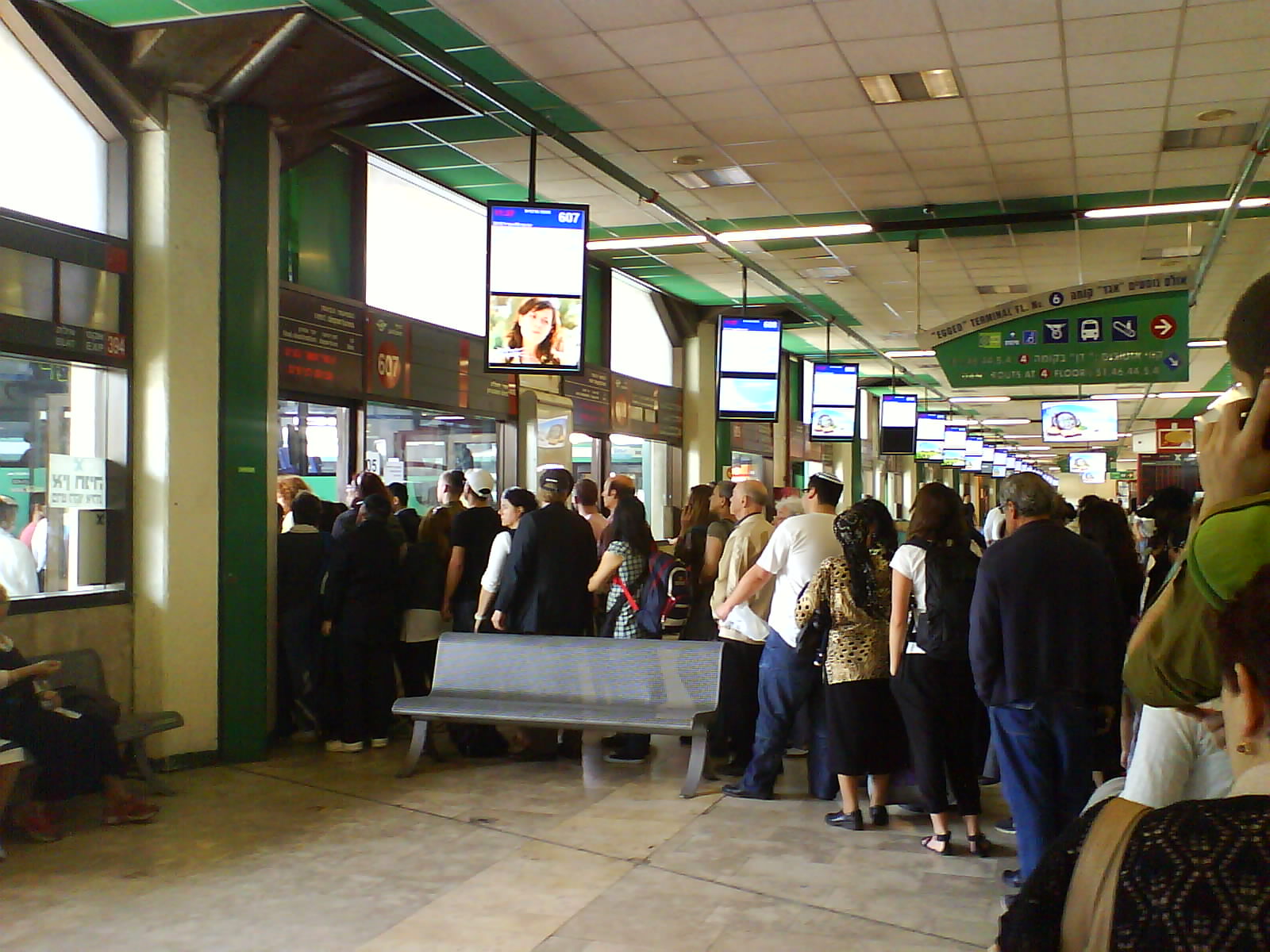
First I didn't want but eventually I took the risk: Going to Jerusalem on Chol haMo'ed Pessach (the intermediate days) is crazy. The city is just packed, as thousands of Jews are finding their way into the capital. Let alone Christian tourists. 

I got my first shock at the Central Bus Station in Tel Aviv this morning when I saw the line up.


 Waiting for the bus to Jerusalem. EGGED organized extra buses going up to Jerusalem.

After my arrival in Jerusalem I saw that it was impossible to get onto the tram, as there were more line ups and the typical fights of who is first.:- ) The result was that I walked all the way down to the Old City. Thus I had plenty of time taking great pictures. 

At the George / Strauss / Jaffa Road junction, Café Ne’eman sells kosher cakes and coffee. Every Pessach, the place is kosher for Passover (according to the Rabbanut Yerushalayim). I had a slice of pizza "kasher le'Pessach" and a coffee. 


The pizza made out of Mazze flour was delicious but very expensive !

The real masses were storming Jaffa Gate, the most secure entrance to the Old City. Jews were flooding the Arab Quarter and we got all stuck. Nothing was moving. Narrow alleyways and too many people making their way down to the Kotel (Western Wall). When we finally got to the Kotel entrance, the security staff was totally unable to deal with so many people at once. The result: Huge line ups and I decided not to go down to the Kotel. 


 An at least 100 meter line up in front of the Western Wall security.


Instead I took pictures from far away. 


The Al Aksa Mosque in the back (round grey roof) and to the right the Arab village of Silwan. 


Leaving the Kotel Plaza through the Dung Gate, I made my way to Silwan where the Jewish "City of King David – Ir David" is located. The crowds had already arrived but I succeeded in buying an ice - cream.


Police at the entrance to Arab Silwan


 Inside the City of King David

I don't regret going to Jerusalem and having some Pessach atmosphere. However, those who are going to the Old City this week, do need one thing: Lots of patience !


In the Arab Quarter of the Old City

Copyright / Photos: Miriam Woelke 


MANY MORE PICTURES WILL FOLLOW !!!

Shmura Mazza


Photos: Miriam Woelke

Saturday, April 7, 2012

Replacing Seder wine with Milk ?

B"H

A true Pessach Story

Once a Jewish woman approached an American Orthodox Rabbi asking him whether she may replace the Seder wine with milk. She said that she is so poor and thus cannot afford wine. The Rabbi thought for a while, gave her 300 $ and told her to buy herself some wine. The woman was happy and went home.

The wife of the Rabbi who had watched the scene was upset, as her husband had just given away 300 $. She asked him for the reason and whether a smaller amount wouldn't have been enough to buy wine. The Rabbi responded that when the woman asked him for replacing wine with milk, he understood that the woman also doesn't have meat for the Seder night. 

One has to look behind the facade and not only listening to what a person says. One has to read between the lines and when someone asked you for help, he may not tell you the whole truth out of shame. Our duty, however, is to look behind the facade and realize the real need of the person asking for help.

Pessach Atmosphere


 Sukkot October 2011: The masses squeezing through the Jewish Quarter in the Old City.

Photo: Miriam Woelke
B"H 

The first day of Pessach is over, however, the Diaspora adds a second day. Tonight, Israel is back to normal but most Israelis are off from work this week. I am not and have to slave around. 

I was thinking about going to Jerusalem this week. Birkat HaCohanim (Blessing of the Cohanim) at the Kotel (Western Wall) and walking around in the Jewish Quarter of the Old City. Simply enjoying the holiday atmosphere and fulfilling the Mitzvah of "Aliyat HaRegel" on Pessach. Nevertheless, I changed my plans because thousands of Jews are going to stream into the Old City. It will be so crowded that one can hardly move. Let alone the traffic jams at the entrance to Jerusalem. The result is that I am either staying at home on my day off or that I am going somewhere else. Why not taking a trip into nature instead of going with the masses ?

Summer has started early this year and the hot humid weather has reached Tel Aviv. 25 degrees Celsius and the beaches are packed. 

Friday, April 6, 2012

Happy Passover - Chag Sameach


 Burning of the Chametz - Bi'ur Chametz in Bnei Brak (2011)

Photo: Miriam Woelke
B"H 

After all the Pessach cleaning there is only one more thing left: To wish you all a great and kosher Passover ! 

There were quite a few readers clicking on an a former article where I wrote about HOLIDAY PRESSURE. I assume that there are many Jews out who still don’t have a Seder place. What I suggest is that you contact your closest Chabad Shaliach, as Chabad arranges thousands of Seders throughout the world. Otherwise don’t get depressed and make yourself a nice evening. Prepare some special food, read the Haggadah and eat a piece of Mazzah. I am doing something with friends and find it much more comfortable than being invited at a family and sitting around a table where I don’t know most of family members. Just in order to have a Seder. I am not that type of person anymore. 

Those of you who are in Tel Aviv: Chabad and further Synagogues are arranging quite a few Seders tonight. Contact Chabad or the Synagogue in Ben Yehudah Street (across the Shufersal and the gym). 

Chag Sameach to all of you !!!

Wednesday, April 4, 2012

Pessach Food Packages for the Needy

B"H

Pessach in Jerusalem: Haredi charity organizations handing out food for the needy.


All photos HERE !

Monday, April 2, 2012

Mazze Baking without Gender Separation

B"H 

The baking of ones own Pessach Mazzot is a Mitzvah and the medieval Kabbalist, Rabbi Yitzchak Luria, considers the Mazze baking as a Tikun (soul rectification). 

The below picture shows a Mazze bakery in Israel. Men and women are working together side by side and no one is sreaming for a gender separation.


Pessach Preparations in Jerusalem

B"H

I spent a few hours in Jerusalem this morning. Shopping and taking pictures showing some Pessach atmosphere. An atmosphere, we don't really have in Tel Aviv.


Pessach shopping at the Machane Yehudah Market.


Nut cookies which are only being sold before and during Pessach. Kidniyot for Ashkenazi Jews but Sephardi Jews eat them. I love them and wish they would be sold throughout the year.


Those coconut cookies are free of Kidniyot. I personally cannot stand them because they are dry and have a soapy taste.


Mazzot variety at the Machane Yehudah Market


Many families only eat handmade Mazzot at the Seder night. The reason is that those Mazzot are quite expensive and not everybody can afford them. On the other days, most Jews eat machine - made Mazzot.


 Selling of the Chametz (Mechirat Chametz) in Machzike'i HaDa'at.


Every Jew should have a Seder and sufficient food. A haredi charity organization is offering help.


Kikar Shabbat this morning. 

Copyright / Photos: Miriam Woelke

The PESSACH STORY


Saturday, March 31, 2012

To - do - List for Pessach

B"H  

Only a few days left until Pessach and there is still so much to do. I am going to start my serious cleaning for the Chag. Moving furniture and getting rid of the last Chametz products. 

Thursday night is already BEDIKAT CHAMETZ – the search for the last Chametz in everyone’s household. Before the search, we are saying a special Bracha (Blessing). The Chametz we find during the search, we are going to burn (BI’UR CHAMETZ) the next morning. Ashkenazi Jews follow the tradition not to eat KIDNIYOT on Pessach. We don’t eat beans, peas, corn, humus and any further product containing Kidniyot. It is extremely important to look at the labels on all kinds of food products during Pessach. What is kasher le’Pessach and what without Kidniyot additions. Sephardi Jews, on the other hand, eat Kidniyot and most (not all) Sephardic Jews eat rice. For Ashkenazi Jews, rice is Chametz. 

The Torah commands every Jew to get rid of any Chametz on Pessach. Grains such as oats, wheat, barley, spelt or rye are totally forbidden and the Torah adds a severe punishment: Jews consuming Chametz during Pessach are excluded from the Jewish nation. This doesn’t mean being excluded in a literal sense but rather a spiritual exclusion. 

In case one doesn’t want to throw away all his Chametz, he can sell it. This procedure is called MECHIRAT CHAMETZ and can even be done online. The selling of the Chametz is a more symbolic act. The Jew receives a certificate saying that his Chametz is not his anymore. A few days before Pessach, Israel’s two Chief Rabbis sell all Chametz to a Druse leader (it has to be a non – Jew). Another symbolic act and right after Pessach is over, ownership goes back to the Jews. Especially bakeries sell their Chametz, as well as other food producers but also private households. 

Some Jews go really nuts about their Pessach cleaning and cover their shelves and kitchen counters with aluminium foil. I do a normal cleaning and don’t drive myself crazy. There are Jews who exchange their entire kitchen dishes. Pots, pants and cutlery. I do this to a certain extend. 

Jews who do use their regular dishes during Pessach take their pots to public places where the pots are boiled in hot water and thus thoroughly cleaned out. Shopping before the holiday is an important subject too. I still have to get Mazza Shmurah. 


Mazza Shmurah

Photo: Miriam Woelke

The Pessach holiday is an expensive event and many Jewish families depend on charity in order to have a Seder. In Israel the intermediate days (Chol HaMo’ed) of Pessach and Sukkot are like a travel season. Thousands of Israelis are off from work and either travel abroad or going on trips around our country. Parks, museums, the Dead Sea, beaches, nature … everything will be packed. 

Pessach is a holiday where Jews go up to Jerusalem. Just like in Temple times when Jews came to Jerusalem in order to bring their holiday sacrifice (Korban Chagigah). 

The To – Do – List is still very long and time is running out. Every year the same craziness …


BI'UR CHAMETZ IN BNEI BRAK (APRIL 2011)


Bi'ur Chametz, the burning of the last Chametz (forbidden grains during Pessach) in the middle of Bnei Brak. Near Rabbi Akiva Street.


Its a custom that religious Jews burn their Lulav from Sukkot together with the Chametz before Pessach. Many Haredim came with their Lulavim and even with the brooms the family cleaned up for Pessach. Everything was thrown into the fire.

Chametz represents the own Yetzer HaRah and with the burning a few hours before Pessach starts, we are symbolically getting rid of our Yetzer Harah.


Public Kashering Kelim (Dishes) for Pessach in Rabbi Akiva Street.


The boiling water where the dishes are put in for a few seconds.


The father of the girls in the background brought his Kiddush cups for kashering.


Further Kashering.

Copyright / Photos: Miriam Woelke

Thursday, March 29, 2012

Wednesday, March 28, 2012

Searching our own personal Chametz


"OZAR HA'MOADIM" - A collection of Poskim on Pessach. I just bought this great book in Bnei Brak.

Photo: Miriam Woelke

B"H 

The book includes "Hilchot Pessach" from the "Shulchan Aruch - Code of Jewish Law", "Hilchot Pessach" from the "Mishna Berura", Pessach commentaries from the ZOHAR, Pessach commentaries from the Bnei Yissachar, the Baal Shem Tov, the Maggid of Mezritch, Chesed le'Avraham, Rabbi Yaakov Yosef of Polonnoye, the Noam Elimelech, Beer Mayim Chaim, Ma'or veShemesh, the Sfat Emet as well as Minhagim from different Zaddikim. 

Rabbi Yaakov Yosef from Polonnoye, the famous student of the Baal Shem Tov:
Before Pessach, the Jews are busying themselves with cleaning the house from any Chametz (forbidden grains and grain products such as wheat, rye, oats, spelt, barley, beer, noodles, etc). Entire families hardly stop scrubbing anything in the household but what about the Chametz inside of us ? 

Before the holiday starts, we should sit down and think about our own personal Chametz and how we get rid of it. In Judaism, Chametz also stands for our Yetzer HaRah (the negative side in each of us) and our task is to overcome our evil Yetzers. The night before Pessach, when we do "Bedikat Chametz - The search for the Chametz", we should take some time and search the Chametz inside of us.

Tuesday, March 27, 2012

Noodles and Soup Nuts "Kasher le'Pessach"

B"H

Not too many years ago, we were complaining about not having noodles during Pessach. As a wheat product, noodles are Chametz and we are forbidden to consume Chametz (forbidden grains such as oats, wheat, spelt, rye or barley) on Pessach. Only dry Mazzot and potatoes, fish, meat, onions, pepper, cabbage and carrots for Ashkenazi Jewry. Sephardi Jews have an easier Pessach, as some of them eat rice (forbidden for Ashkenazi Jews) and Kidniyot (peas, humus, corn or anything made of it). Then the first cakes kosher for Passover were available. Made out of potatoe flour. 

When I went to the supermarket tonight, believe it or not, I saw noodles kosher for Pessach. Noodles and soup nuts ! Some noodles kosher for Pessach are for Kidniyot eaters such as Sephardi Jews but I also saw Pessach noodles without Kidniyot.

Here are a few impressions from the MEGA supermarket branch in Dizengoff Street / corner Pinsker in Tel Aviv:


Kosher for Pessach !


Noodles kosher for Passover


With Kidniyot and made from rice.


Soup nuts kosher for Passover.


Wine for the Seder


Mazzot


Biscuits kosher for Pessach

Photos: Miriam Woelke

No doubt. Pessach is an expensive holiday and many Jewish families in Israel, including plenty of haredi families in Mea Shearim or Bnei Brak, depend on charity organizations handing out food baskets.
One of those organizations is located in Mea Shearim and run by Chassidut Toldot Avraham Yitzchak: "LINAT HA'CHESED". Two years ago, I talked to some of the Chassidim running LINAT HA'CHESED.